How Bruce Springsteen Inspired My Creative Process

I’ve just seen the Bruce Springsteen biopic (Deliver Me from No Where) at my local cinema (Act One). I rushed out on Friday straight after work to see it, catching the early evening show starting at 5:40.

Just one other person was sitting in screen one. Or was it screen two? I was delighted to have the screen to ourselves. Yet I was still worried about disturbing the person in the next row with the rustle of my crisp bag. Although we had the screen to ourselves, I noticed how Act One Cinema is buzzing these days. They had a sell-out event in the lounge. I expected to see a fuller theater. I began to wonder why there weren’t more people attending. There were only two of us watching. This turned out to symbolize a parallel experience to the main story in the film. We were two lone viewers watching the film about Bruce Springsteen’s solitary segment of his journey as a songwriter. We were thus not alone.

I imagine that the film’s marketers would say that I might not be a typical fan of The Boss. This is because I am a 60+ black British female. I deduce this because I rarely see people who look like me in the video glimpses I catch of him singing to his massive audiences. But. I’ve always loved the Rolling Stones. I have even been to their Hyde Park concert in the early 90s. Nevertheless, I never went to a Bruce Springsteen concert.

I received the Act One cinema newsletter announcing the film. Instantly, I wanted to see the movie and booked it.

The ticket booking then took me on a nostalgic journey. I remembered days playing some of Springsteen’s popular tracks on a couple of albums. This was while I worked in Qatar many decades ago (early 80’s). We played Springsteen tunes at dizzy expatriate parties.

I also played his album during moments when I felt alone there. The songs provided comfort when, as a 22/23-year-old, I was far away from home. Many of his lyrics expressed my feelings about home. They made me realise I missed my home folks. They also highlighted my need to celebrate identity. I felt this way even though I wasn’t born in the USA. During those lonely times, Bruce Springsteen’s songs made me feel connected and uplifted.

unmemorable purchase

When I think about buying the album on cassette, I now wonder if it wasn’t a knockoff from the souk. Or perhaps it was an acquisition made during a frenzied shopping moment at the airport duty free. This could have been during one of the trips we did to Dubai or Bahrain. I certainly didn’t buy the Bruce Springsteen album in a cherished way from Tower Records. It wasn’t bought from HMV on Oxford Street. And it definitely wouldn’t be a connoisseur-like buy of a vinyl album. Back in those days, vinyl was what your dad’s music collection was on. Cassettes were the thing in the 80s.

The no Bruce years

When I came back to the UK in 1990, I don’t think I played any more Bruce Springsteen tracks. I recall one cheeky friend critiquing and questioning why I had Bruce Springsteen in my music collection. Then yesterday, I listened to the Nebraska track on Spotify. I was inspired to do this after watching the movie on Friday.

Making sense of the story

This morning, I watched a review of the Springsteen film on YouTube. It was by Mark Kermode and Simon Mayo. They, too, seemed to enjoy watching the film. The reviewers wondered whether the film that was centred on a specific part of Bruce Springsteen’s life had mass appeal. They thought it might be too nerdy among a couple of other things.

I can answer their query by saying that the film did indeed appeal to me. This is true even though I am outside the artist’s obvious main catchment group. I found observing the film’s depiction of Bruce’s creative process mesmerising. It was also very connecting. It really gave me a boost and encouragement around my own creative process. I resonated with the solitude and deep reflection shown in his music writing. He makes cultural connections using TV, film and news. His songs also draw from architecture and childhood memories. These inspirational elements resonated with me. Bruce Springsteen helped me feel less alone about my creativity once again. This time, it concerns the journey and who should be there in my creative process.

Antecedents to the creative process

In the film, there was also an important piece about subconscious messages and depression. It explored how the creation is the product of those surfaced thought processes. It made me recall something interesting I had read. Theresa Amabile, a creativity professor at Harvard, reminds us that Freud said creativity is the sublimation of repressed complexes.

I particularly connected with the character and musician in scenes where he was searching for his dad. His dad was hearing voices and undergoing mental health challenges. Additionally, dealing with the worry of family members taking their medication was significant for me. It resonated with me. I also went on a journey to find my dad. He faced mental health challenges, too. The film depicted a paradoxical longing for family or home town connection. This longing persists despite being fearful of what you might find when you draw closer. It also showed the physical sickness and nausea felt when we draw near to the conflict. It is a terrifying task that is at hand. The complexities in the relationships with the people we want to support add to this challenge. The film depicted the mess and tensions around these fraught relationships well.

The sickness scene when he was driving to LA matches my memories. I remember using the sick bag on the plane returning to the UK. It wasn’t because of eating something bad. It was due to fear of reconnecting with my old town (London) and family.

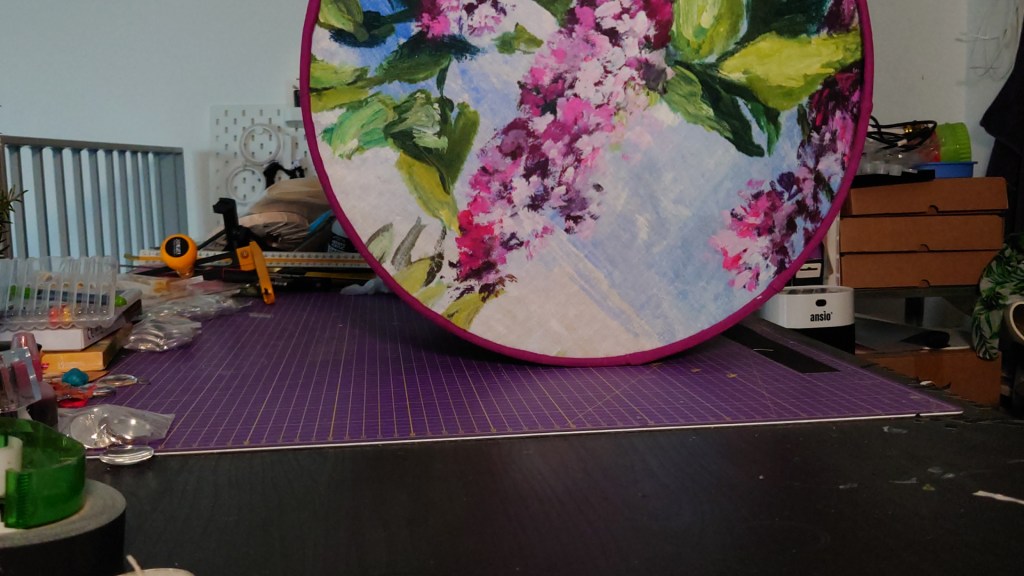
My small series of poured-ink paintings and poured art conveys the complex, messy feelings about belonging. Figuratively, these also show the sickness and tensions felt in navigating relationship conflicts on the journey towards achieving psychological safety.


The above shows two segments from my series of poured paintings using alcohol inks or acrylic inks

I’m planning to create a set of stationery and training/meeting room desk decor from these poured paintings. Follow to learn about when these are released. Thanks for reading thus far.

Have you seen the film yet? What did you think?

How to Assemble Stunning Diffusers for Your Lampshades

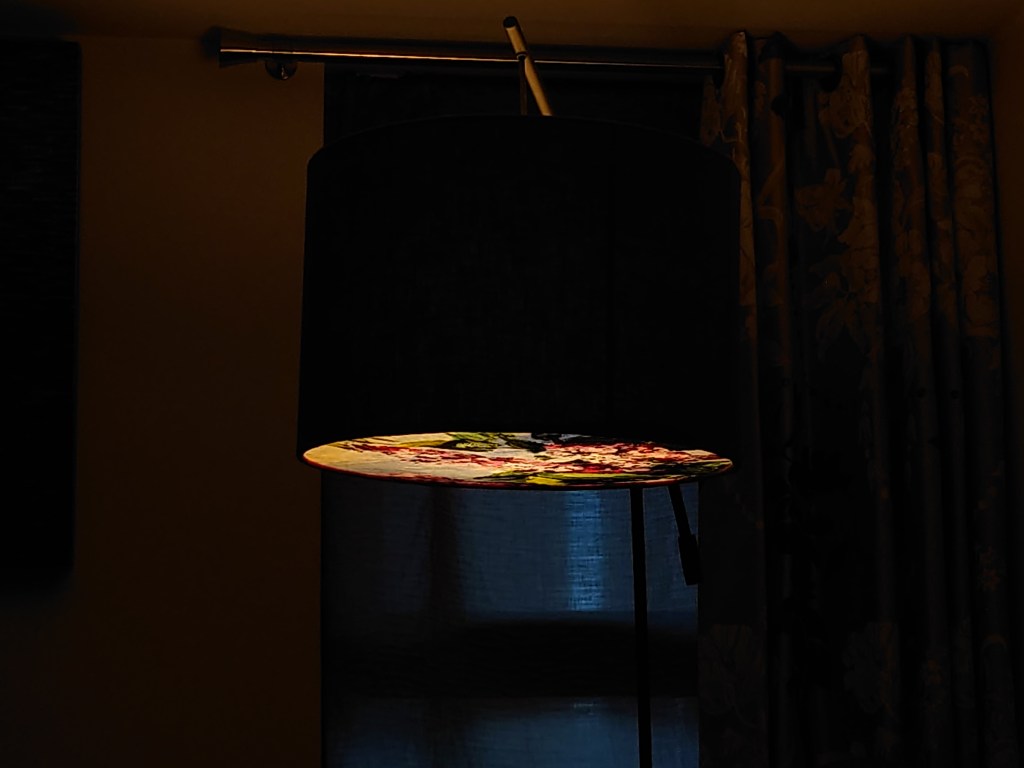
This week, I created a YouTube video to show buyers how I create the beautiful diffusers for my lampshades.

Though Edison-style lightbulbs are available, they don’t always suit every interior style scheme, especially if you’re going for a more cosy, less industrial look.

Watch how easy it is to assemble a diffuser for your lamp shades. I’m considering having these as kits in my shop as an alternative way to hang and present my artwork.

Enhance Your Virtual Background for Confident Video Calls

This video explains why I started creating and making items to help virtual working professionals stage their on-camera backgrounds to emanate meaning about how they work with people, on projects, and in programmes, so they can confidently always feel proud to switch their cameras on.

Transforming Leadership Through Art: Join My Journey

Welcome to 2025.

I continue logging my now developed practice and process of sharpening my artistic talents. The first half of the year will see less written content from me. Instead I shall be creating more videos and providing links of what I have uploaded from my you tube channel.

I also integrate more of my insights from my executive team coaching course that I did as I found I can use my practice as an artist and maker to help senior executive teams and virtual teams become more effective. Look out for the calls for participants to the inaugural art led executive team coaching programs, that I will personally offer and deliver early to mid 2025.

So for this week, enjoy this video of me taking down my Christmas decorations from my own home office backdrop. It might perhaps be symbolic of marking the end of an era as this year I integrate more of my talents into on sophisticated offering to the world.

Subscribe and ask questions about how I integrate art and playful practices into developing leadership teams.

Festive Tips for a Welcoming Virtual Office

This week I was delivering professional development training and facilitated workshops in Manchester in the north of the UK and back down in London.

Me setting down after leading a one day professional development workshop about successful meetings

On the way back home I noticed how all the HQ buildings in the area had beautiful Xmas trees. Next year I will do a post on the line up of Xmas trees at corporate HQ buildings.

AI generated image

It told me something about how just putting up a Christmas tree in the spacious reception areas of these building is important for converting a sense of arrival and welcoming.

Seeing how the facilities teams of these massive organisation seriously consider the decorations made me realise that when we work from home we must also create our version of the well dressed welcoming Christmas tree for people that join our meetings online in virtual meetings.

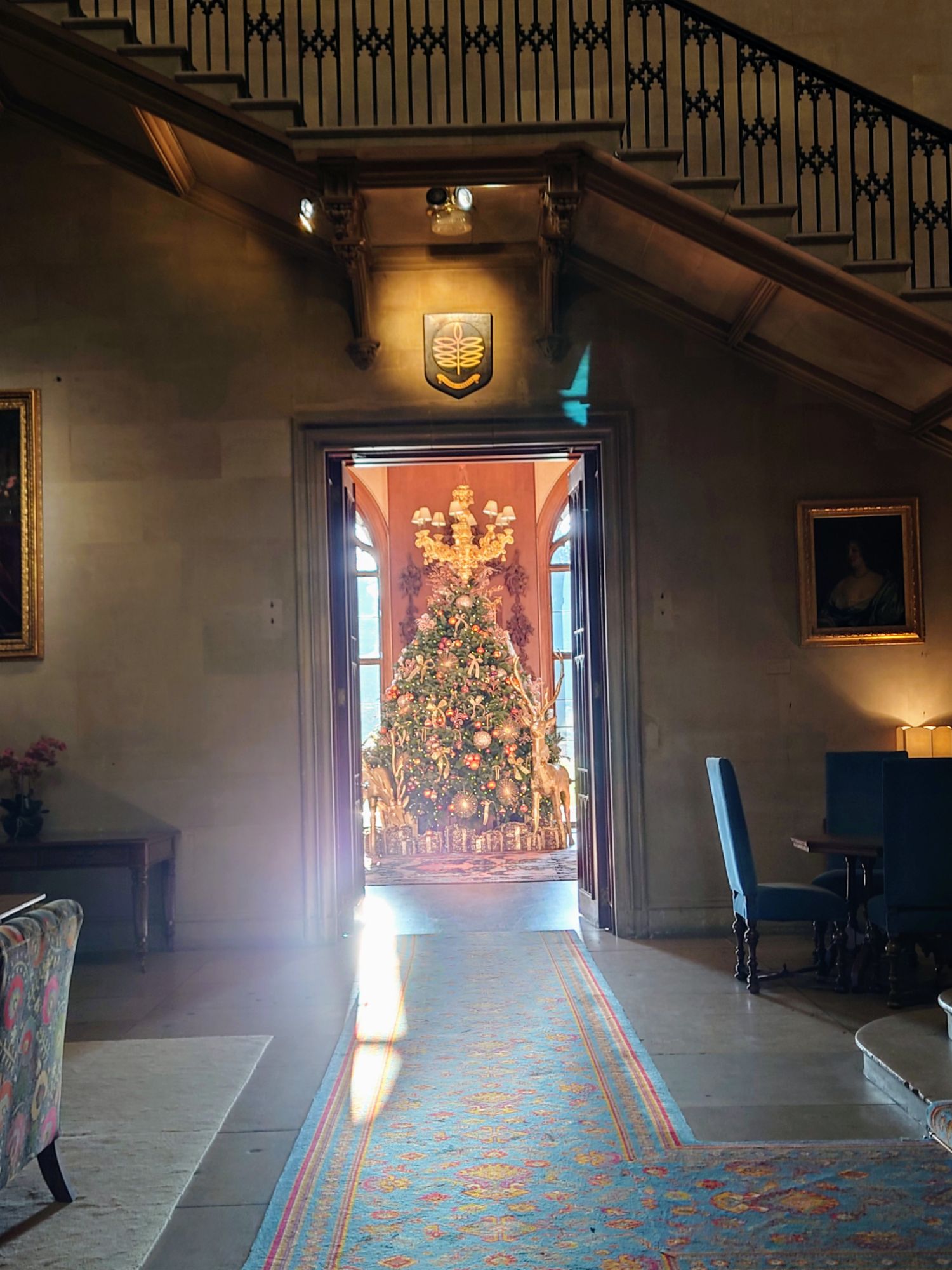
My photo of Ashridge house Xmas decor
The beautiful tree in the entrance to the learner’s breakout area at Ashridge House
Me using the decor backdrop of Motel One in Manchester

3 top tips for more festive spirit in your virtual and online office scene

  1. Print off a printable Jolly leadership quiz to have some festive fun amongst other managers to bring some cheer to the workplace and available in my Etsy shop this holiday season.
  2. Hang a stocking on your book shelf to signify and mark the festive season has begun and start conversations about being ready for Christmas and build rapport conversations about Xmas gift giving habits
  3. Arrange some baubles on your shelf to give your audience something to break the ice about when joining your online meetings

What will you do decor wise this season to bring cheer to the office and team?

Eclectic Inspirations: From Ancient Crafts to Modern Brands

Look up from the main hall at Ashridge house and you will marvel at the amazing craftwork and design choices of those with an eye for style and culture hundreds of years ago.

Overall my visits this week made me notice the extent of my eclectic appreciations, I can be enthralled by ancient design and crafts through to being captivated by 21st century crafting of our cultural practices from brands like Formaly Known as Hackles.

Improving Corporate Training Room Design

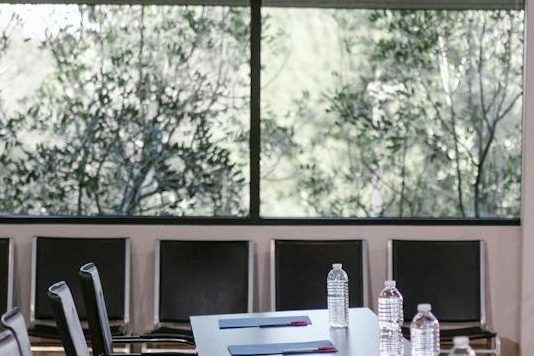
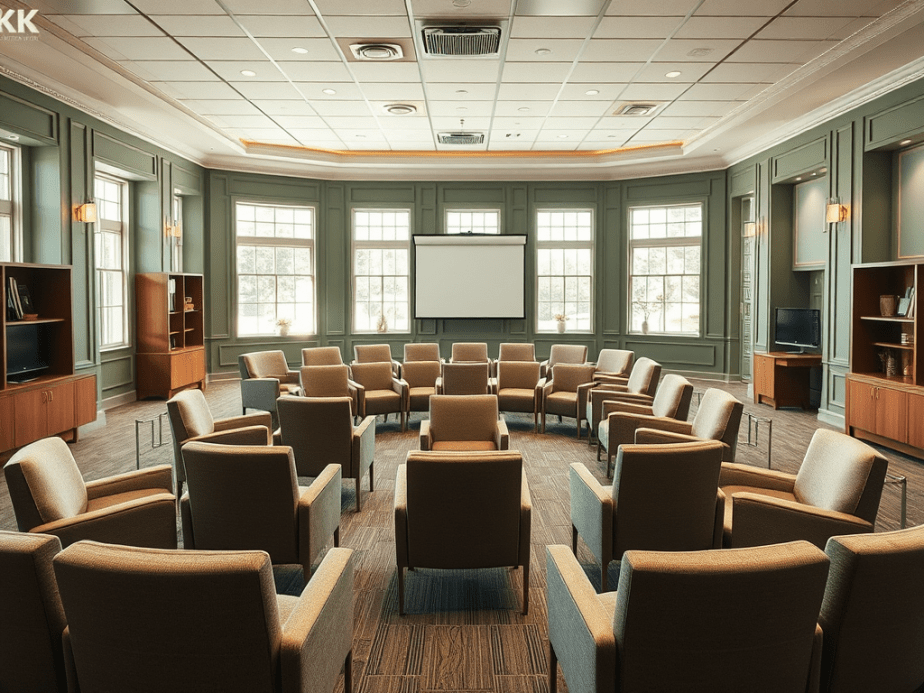
I visited a beautiful training room this week but it was hiding several problems. The issues found made me want to share some tips on training room design for architects, interior design team, facilities managers.

The beautiful training room I visited had fancy comfortable seating, very nice wide desks on wheels, natural looking carpet all the modern technology with two big screens in the front that I could can easily log onto. There were also two beautiful side cabinets storing other trainer’s accouterments like post it notes, marshmallows. There was even room for me to store my coat and bags to keep the room tidy.

Image created with AI based on the word in this post

Style over substance: The impractical training room layout

However one thing I noticed about the room, even though it was large, was the lack of circulation space. The session was originally booked for 14 max but they thought they’d squeeze another two people in. This meant that arranging tables in a U shape pinned everyone to the walls leaving a large expanse of space in the middle. This is not conducive to group working because no one could move around easily.

Style over substance: Training room walls that would not stick

This beautiful training room had deep sage green walls stylishly painted up to seven eights of the wall with a coordinating ivory colour for the last eighth and the ceiling. It reminded me of a beautiful cosey shaker style kitchen. But when it came to me sticking full flip charts up to remind learners of the points we had covered so far it could not be done because the walls seemed to be anti tack. I guess somewhere in the building’s history the facilities manager got fed up of trainers using blue tack to stick things on the walls.

Photo by Blue Bird on Pexels.com

Why training room walls are important

Having anti tack walls is understandable if you have previously spent loads of time and resources getting the cleaners to remove blue tack using the recommended direct heat like a hairdryer on the blue tack itself.

Photo by Liliana Drew on Pexels.com

But having anti tack walls creates a corporate learning & development and organisation development problem. You see we trainers need the walls to showcase learning. To show case learning is to have a tangible artifact of ideas generated in the session and that is more than one flip chart stand can do.

Photo by Ron Lach on Pexels.com

How corporate trainers showcase learning

We show case learning in the corporate training room in various ways. We typically (display gallery style) the completed flip charts that everyone has done. Learners throughout the day then reread what some of the ah ha’s and moments of epiphany are within the room at moments that suits them. It helps to reinforce diversity in learning & development.

Photo by RDNE Stock project on Pexels.com

We also show case collaborative working through the post it notes that get stuck on the walls.

Photo by SHVETS production on Pexels.com

We use the wall to display analytical and creative thinking when working in a group. Walls help to magnify the writing space. Walls expand the written canvas from the individual’s perspective out to the group’s perspective.

Photo by Mikhail Nilov on Pexels.com

Therefore a training room festooned with used flip chart pages and written on post it notes from brain writing sessions, or creation activities or problem solving sprints serves as visible and physical evidence of the individual and group learning work that has gone on in that room.

Photo by Alena Darmel on Pexels.com

The Future Design of Corporate Training Rooms

I’ve seen great examples of corporate training rooms as I travel around the world delivering leadership and management development . The more advanced training room decor takes account of trainers/ instructors needing to use the wall by replacing the inner walls with glass panels and providing white tack for the rest of the walls. .

Photo by Gustavo Fring on Pexels.com

Glass walls are then perfect for sticking sticky flip chart or post it notes to the walls. I’ve also seen other kinds of vinyl decor panel used. Learners can even write directly on the glass walls, which support creativity and enhances the problem solving process.

Photo by RDNE Stock project on Pexels.com

But ultimately it would be great if corporate office training room designers could consider installing more white boards and screens so that opportunities to showcase learning is on all four walls, without the need for desks.

Image created with AI Prompt corporate training room like featured image but with screens one windows and all walls with glass wall looking out to greenery and big plants internally. And comfortable seating for eight.

Leadership and management development consultants/instructors and trainers are now in an era where, we no longer want to get managers in a room where they just sit and stare at one square light at the front of the room for six hours.

Image created with AI prompt corporate training room in U shape without desks

We no longer want executive development shaped by the the training room’s limitations. Indeed some of the problems that companies face with with building inclusive working, collaboration or the depth of thinking that is required might be down to the amenities of the training room. The training room is a visible cultural artifact subtly symbolising “the way we do things around here”.

How professionals can make training rooms add value

We now need interior designers and architects of corporate headquarters, campuses and head offices to show deeper consideration of the design of the corporate training room. See my top 10 tips as a summary of this post.

10 Tips to Improve Training Room Decor & Design

  1. Room aesthetics are important but should not devalue function
  2. Create a room with a view of nature
  3. Design in glass panel walls to showcase learning
  4. Plants are nice for oxygen and neuro-aesthetics
  5. Cabinets could be built into walls so they don’t get in the way of circulation space needed for group work
  6. Integrate screens on three walls
  7. Install whiteboards on three walls (if no glass walls)
  8. Design, plan and build writable four walls
  9. Enable table or desk free room for management development suites and executive development zones
  10. Always consider how the training room acts to symbolise the desired culture

Please follow for more. Each week for the rest of 2024 I shall be visiting corporate training rooms of all shapes and sizes up and down the UK. I will post more ideas about best practice and ideas for improvements to corporate training room design, decor and space planning, in the weeks to come.

Comment below on your good or bad experience of corporate training room decor.