The AI created the above featured image after a few attempts of not getting it quite right. I then asked it to show me an image of a black woman doing finishing touches to artwork and photography. I give it 8/10 this week.
This week I was able to do finishing touches, like mounting an abstract painting on paper onto canvas and setting up for product photography. I also completed the remaining x15 A5 sized artworks on art board.
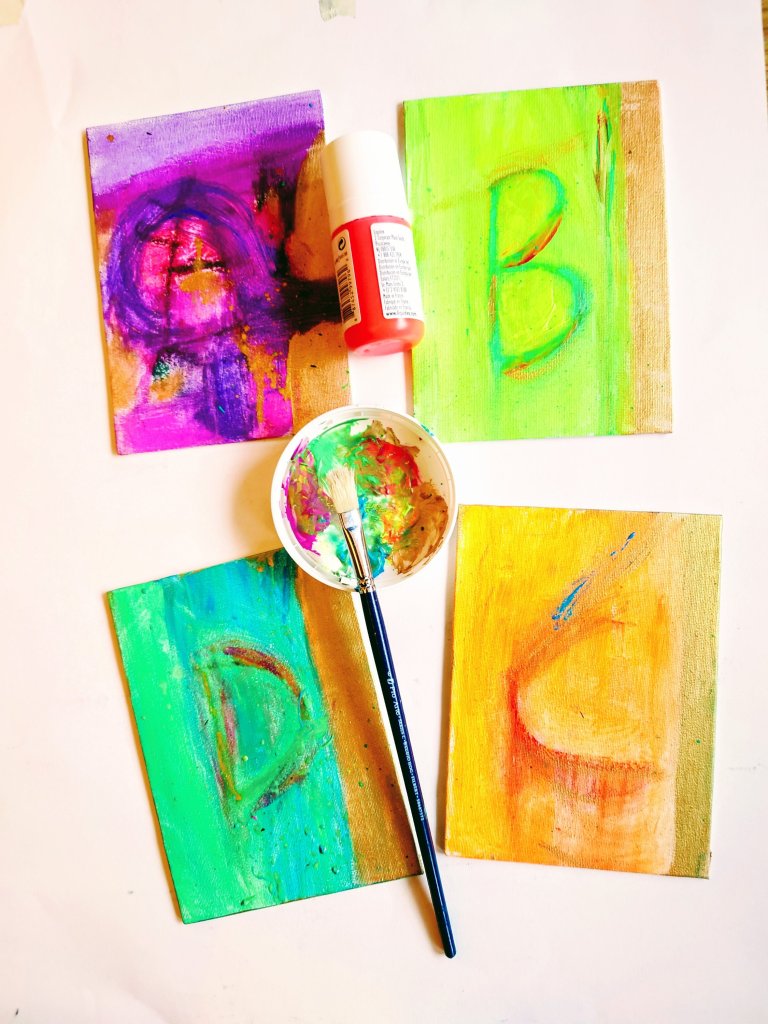
Some of the x 15 abstract collaged monograms sculpted paintskins on canvas board Doing product photography
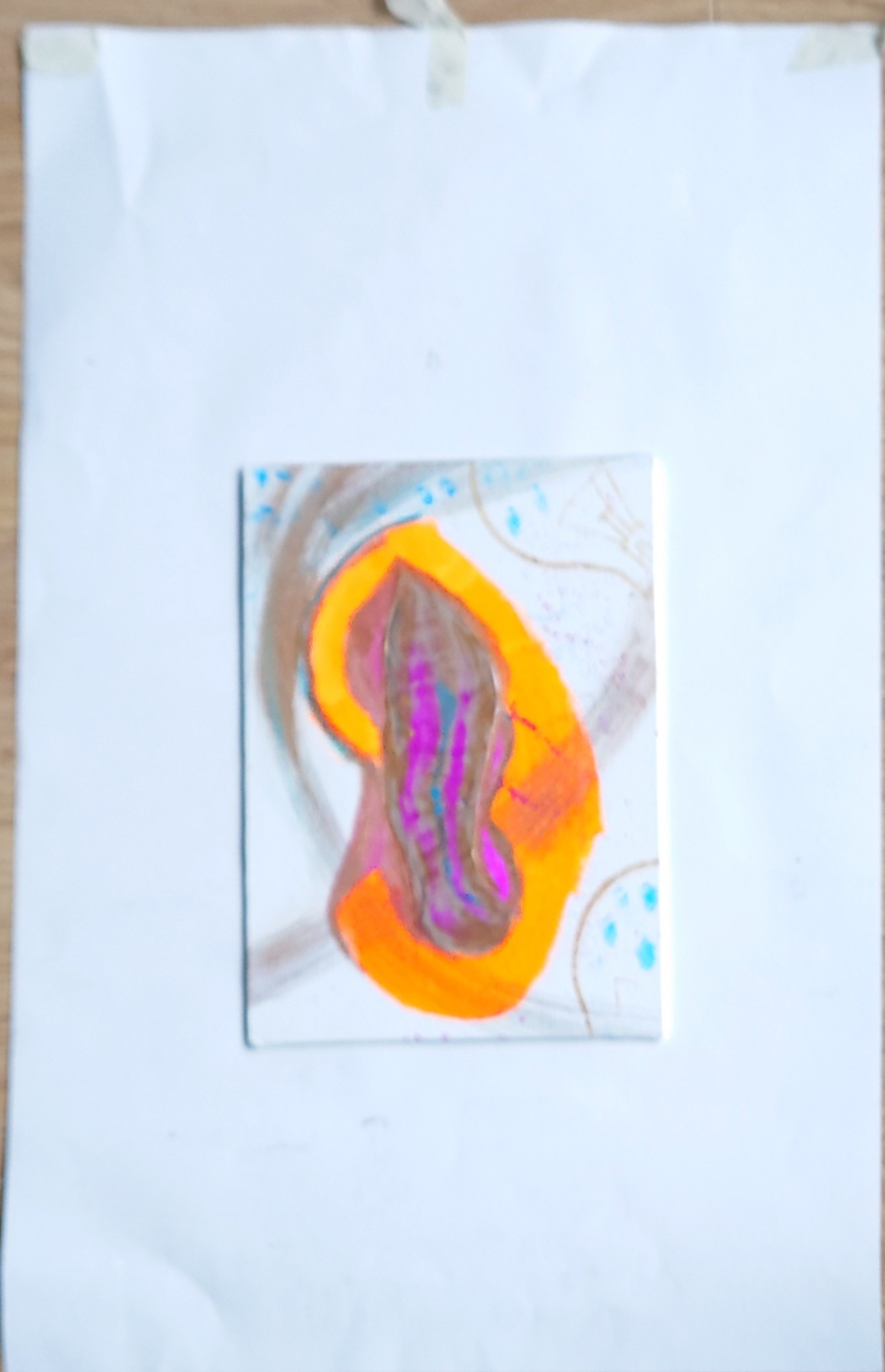
Love this mixed abstract painting using acrylic inks on paper mounted on framed canvas.
It has taken over a year to complete the series of about 30 + mixed media artwork featuring paint skins for texture. I’m also glad to have come up with the concept of paint skin to create abstract versions of the monogram underpainting.
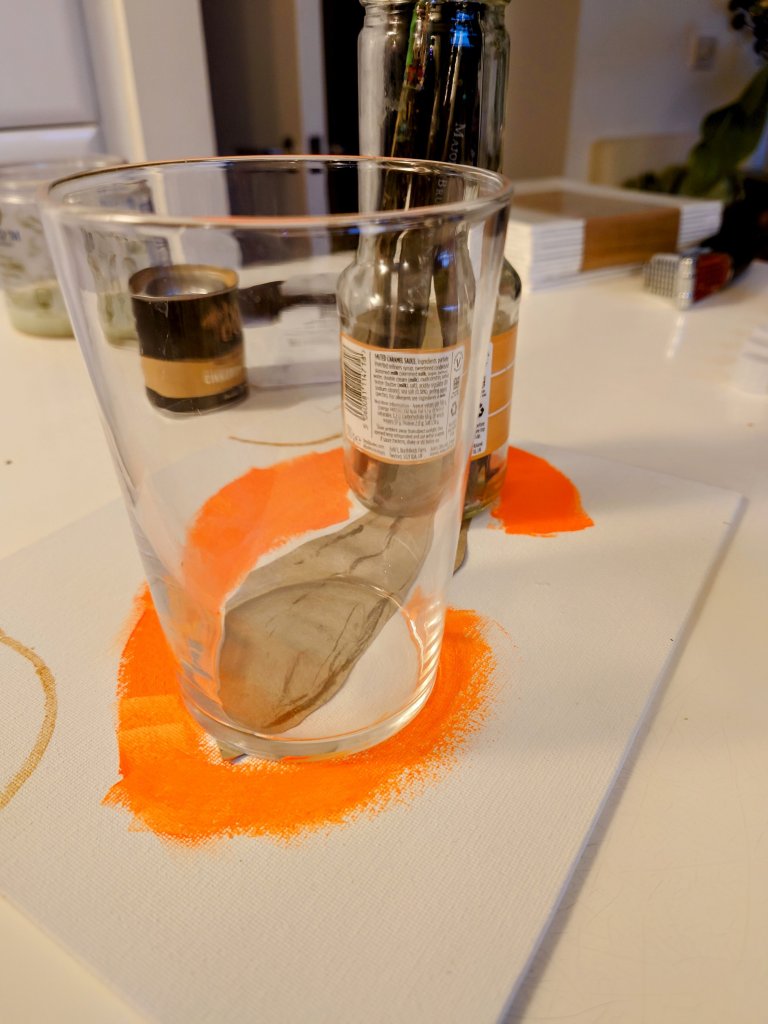
Making an abstract monogram from sculpted paint skins
I love the interesting mix of textures that the offset mosaic like arrangement in the colleage creates.
The knife-sculpted paint skin allows me to extend the boundaries of the canvas, reminding me of overgrown nails. 💅🏽, which I later trimmed down. This has inspired future works.
As I write ✍️, it is the first interval at Sadlers Wells on Saturday 16th September. We just finished watching the first act of The Alvin Ailey dance Roy’s Joys.
Recently I’ve been experimenting with colour intensity and they’re beginning to convey my sense about how we work and contemporary working environments.
I’ve started to integrate my two arts. In psychology, that’s a good thing to do to become whole. But I thought about that after and not before I did it.
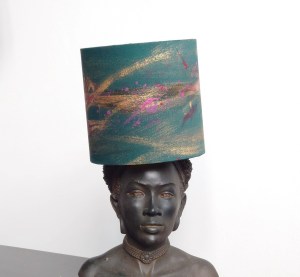
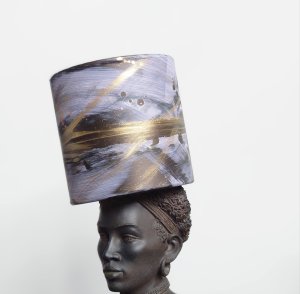
I have integrated my graffiti art onto my lampshades. They look rather cool. I noticed my curly cursive writing when using paint and how it has a unique style of its own despite my dyspraxia dyslexia which allows the lines and the curves to take on another life of their own.
I was also inspired by a question in our Facebook group for lampshade makers. Someone had asked how to display the lampshades when they go to fairs. This question comes up often. The idea to use mannequins to display the maker’s lampshades came up, and I scoffed at the response, thinking it was that gimmicky, and I couldn’t imagine how that might look. It might look hideous and distract from the shades for the person asking. And I also thought that lagging the mannequins around and putting them together at the fair was difficult.
The person had large shades about 30cm 40 cm wide, and ultimately, the look would have been very Ascot-like, as if the manikins were wearing wide-brimmed hats.
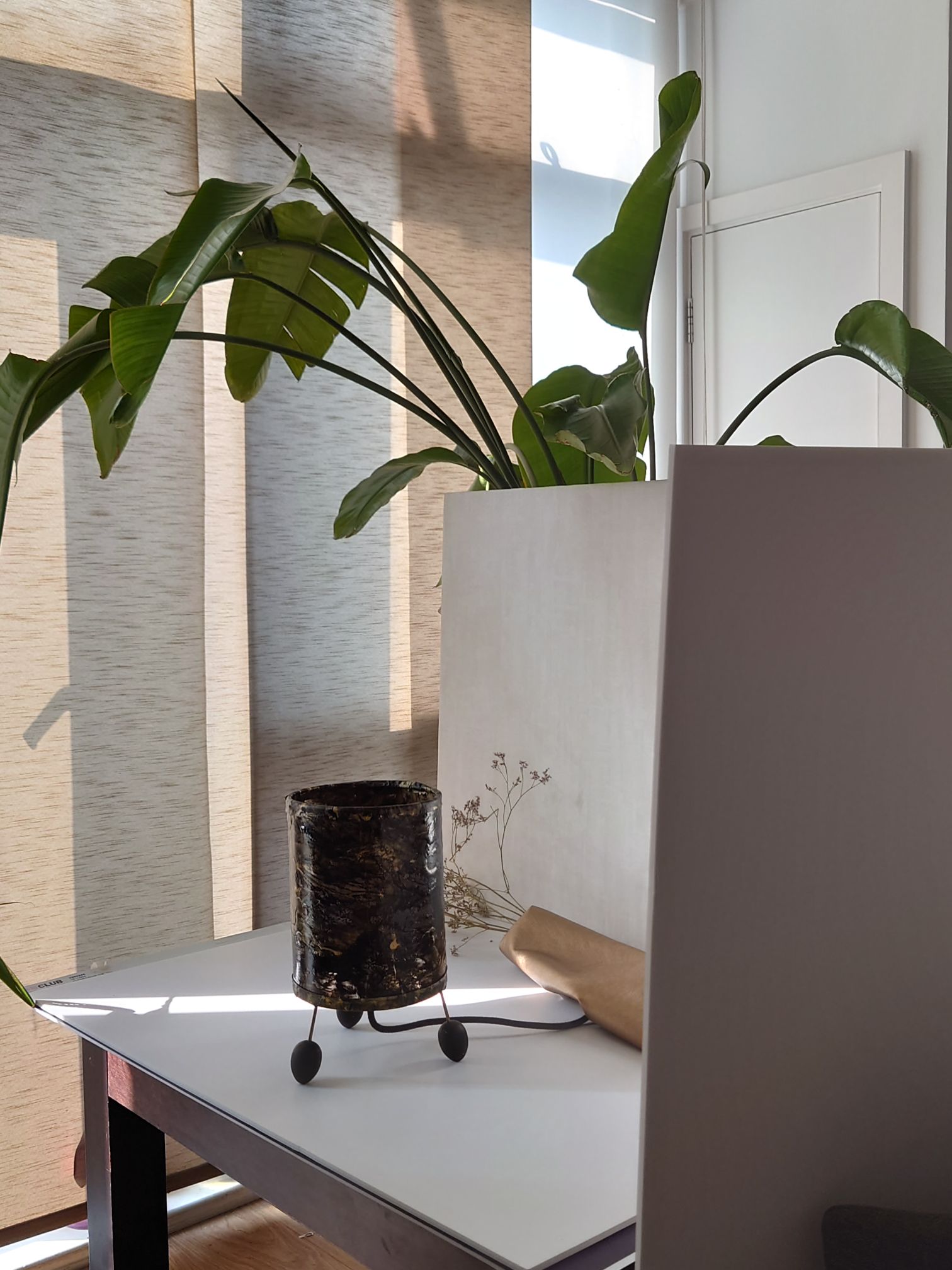
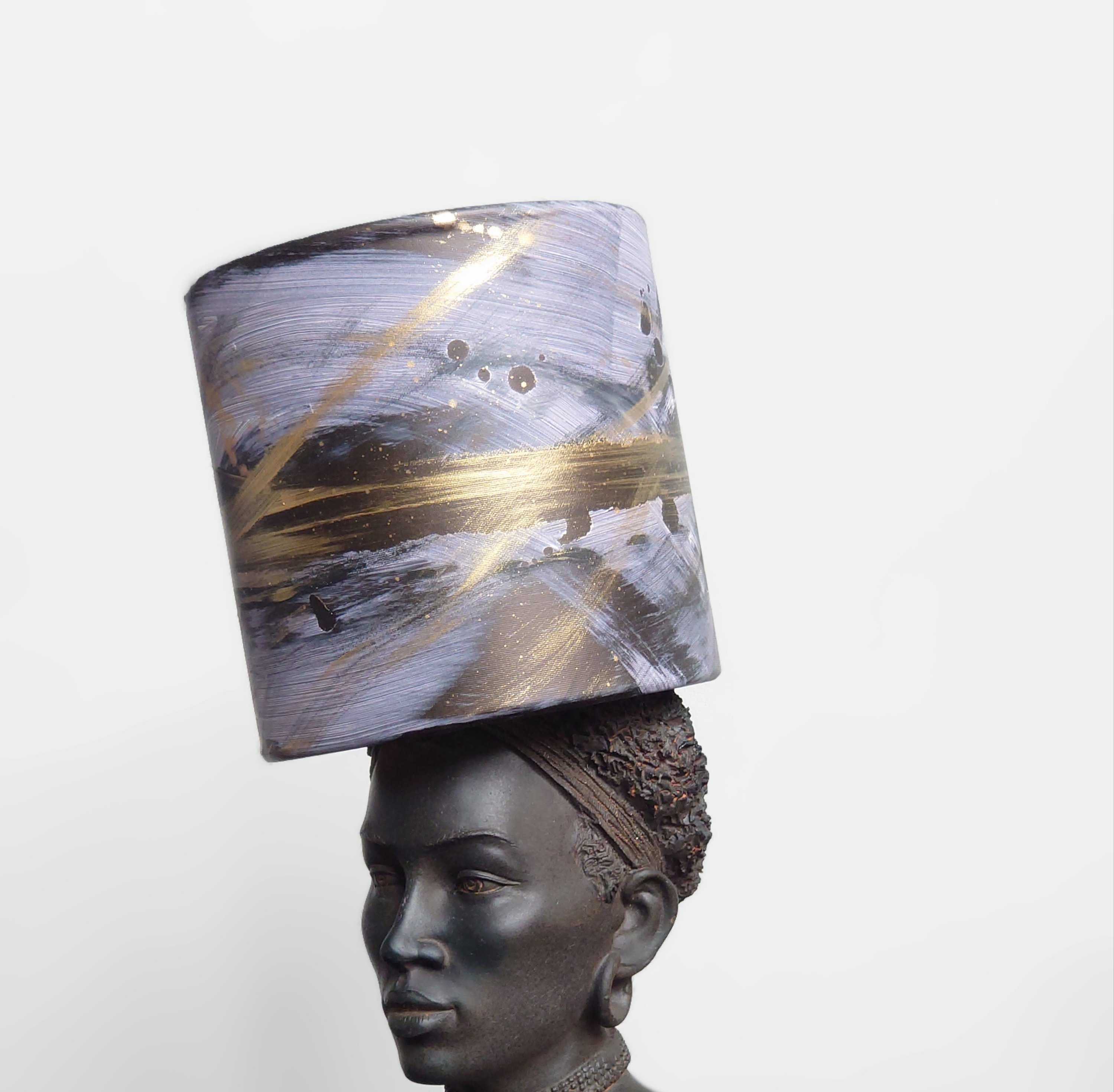
Then I didn’t think about it again until I had to take some images for my 15 cm lampshades for the desks of stylish professionals and their statement yet cosey task lighting. I was searching for inspiration and realised that sitting across from me was a head figure I bought from a trendy interior designer, Abigail Ahern’s shop. I promptly placed one of the lampshades on the statue, which did seem like sacrilege a bit at first.
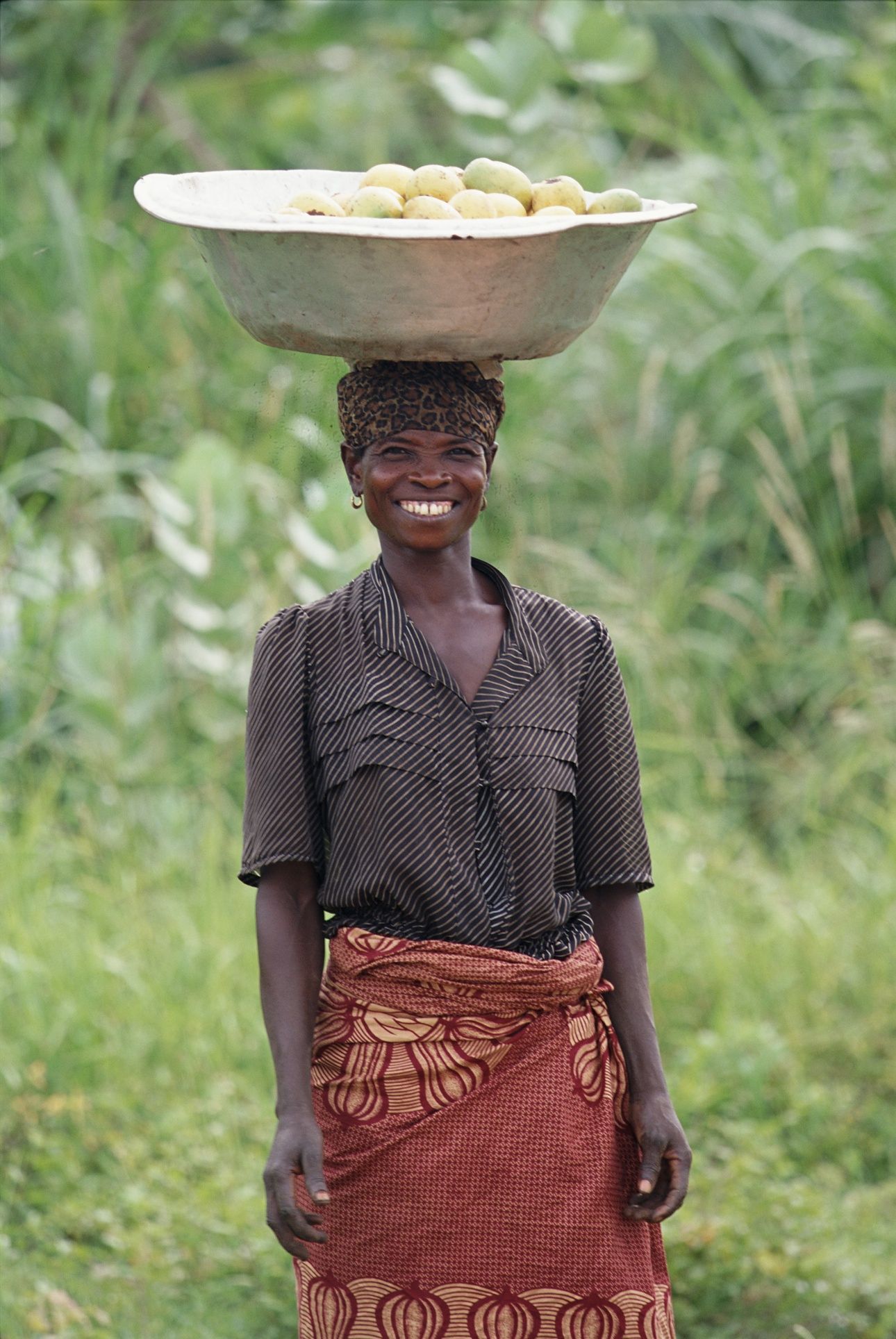
However, after some thinking about it, I realised how fitting and natural it was., Seeing a statue of a magnificent African woman or woman with African heritage with a tall cylindrical object on the head reminds me of what I saw when I visited Africa. I travelled on a Kenya safari and spent some time in Nigeria for work. Seeing a magnificent woman walking around with a cylindrical bucket containing water, shopping or goods for the markets on their head was normal. But it always pains me that the cylindrical buckets the African women (children too and young men to a lesser extent) normally have on their heads were often some garish yellow or blue plastic unimaginative vessels.
Looking at my graffiti lampshades on the figurine in more depth; I began to take pride in what my eyes were seeing. Noticing how my graffiti artwork on the lampshades then placed on the African woman’s head felt like fantastical art because it depicted a more luxurious scene, albeit slightly surreal.
I imagined myself as an African woman and recalled what I saw in the ritual of attending church and weddings and wearing big wrappers that acted like gigantic fabric expressions of a crown. The look is awesome.
But what if there could be something like my beautiful cylindrical vessels (lampshades) that the African women could continue deftly carrying on their heads as they go about their daily life and l chores?
It dawned on me that perhaps my placing of lampshades with graffiti art on sculpture together is another form of fantastical black art. It is indeed my fantasy that those wonderful ladies I saw in Africa had something more glamorous as a vessel to carry on their heads. I would like them to freely cast away those horrible unimaginative plastic yellow buckets and go for something more considered in its design.
Those women are very entrepreneurial and perhaps like taxi drivers in London; they could get the carrying vessels of their future sponsored by local businesses, and a local creative person might be able to use top calligraphy skills and design competence to embellish their vessels with more beautiful graphics that become useful communication collateral for local businesses. Ultimately their new carrier vessel earns revenue through advertising the local firm.
I’m going to look into it and see how I can help. However, I wouldn’t be surprised if the women have probably already done it because African women are reported to be highly entrepreneurial. But I would like to get an insight into what African friends think of my fantastical black art (graffiti lampshades on African head sculptures) and the extent to which it reflects the 21st-century African and African women’s vessels they carry around on their heads.
It was surprising to realise how much of my art is influenced by the mid-century decor, 60’s culture and Mondrain.
Inspo 1: Wednesday Dances Watusi 1964
This year’s memorable Christmas activity was watching the Netflix Wednesday series back to back. Watching it on so many levels was amazing as it helped me recall the 1960s version of the Adams family, which I enjoyed revisiting over the holidays. As a dance enthusiast, I was keen to find my favourite clip of Wednesday Adam’s original dance done by actor Lisa Loring.
My view watching Wednesday Lisa Loring’s lesser-seen dancing clip
Episode: Lurch, the Teenage Idol (1965) Adams Family Season 1, Episode 33- Director Sidney Lanfield Wednesday (played by Lisa Loring) dances to Lurch’s new pop song at 5 min 55 seconds. This snip is a different version of the more commonly found clip. The above is my favourite and is often shown in goth GIFs and David Bowie memes without the original soundtrack.
Seeing the clip was joyful. It reminded me of watching it the first time with my younger sister and being closer to Lisa Loring’s age. At the time, my sister danced a lot like her, and whenever I see clips of Lisa Loring’s Wednesday dance, it brings back happy memories of being that young in the 60s. I’m sure that’s one of the reasons why the current 2022 production of Wednesday on Netflix is doing so well. You see. The new version of the viral Wednesday dance might be boosted because it is enjoying the nostalgic visits from the Baby Boomers and Generation X, who remember the original dance scenes being so poignant for them at the time. I wonder if they have thought of that.
Interestingly, my friend Janet said she had been watching the Wednesday show with her 13-year-old daughter and younger son, She said it brought the family lots of joy. It made us smile as it shows how the Netflix series has mass appeal. Janet and I further discussed (wearing our education experts’ hats on) how the subtext of the 2022 and the original 1964 versions of these shows seem to share a positive narrative about neurodiversity and the tolerance, acceptance and management of difference. I didn’t watch the ’90s version so cannot comment further on that.
Most importantly for my art practice, the research I did and revisiting of the old Adam’s family clips have helped, this week. The images below show how I was influenced to create monochromatic elements and embrace the mid-century look I had created. The crisp white of Wednesday’s dress collar and its oblique triangle shapes is particularly meaningful and is expressed in my paintings this week (on reflection).
However, further analysis of the underpinnings of my painting makes me think of another of my 1960’s cultural influencers—the artist Mondrain.
Inspo 2: Mondrain’s mid-century vibe
If you were to research contemporary abstract art, you get blogs and google results showing what contemporary abstract art is.
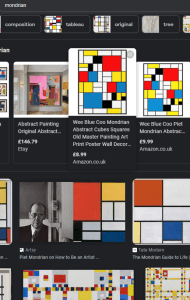
However, I’ve been practising my experimentation with contemporary abstract art. I’ve long been influenced by the artist Mondrian. I like his crisp lines, clear shapes and simple play with colours. Some of my earlier works were too much on the simple side, akin to Mondrain’s primary-coloured iconic squares and grids. When I was 15 and doing my Art A level I recall my art teacher remarking how some of my work was like Mondrain. Below is a snap of some textile designs I created possibly influenced by Mondrian’s works. But at 15 I was probably more influenced by others that were influenced. It wasn’t until my art teacher saw my work that he introduced the artists to me. See below
Screen grab of Google search Mondrain
My 45 year old textile design influenced by Mondrain
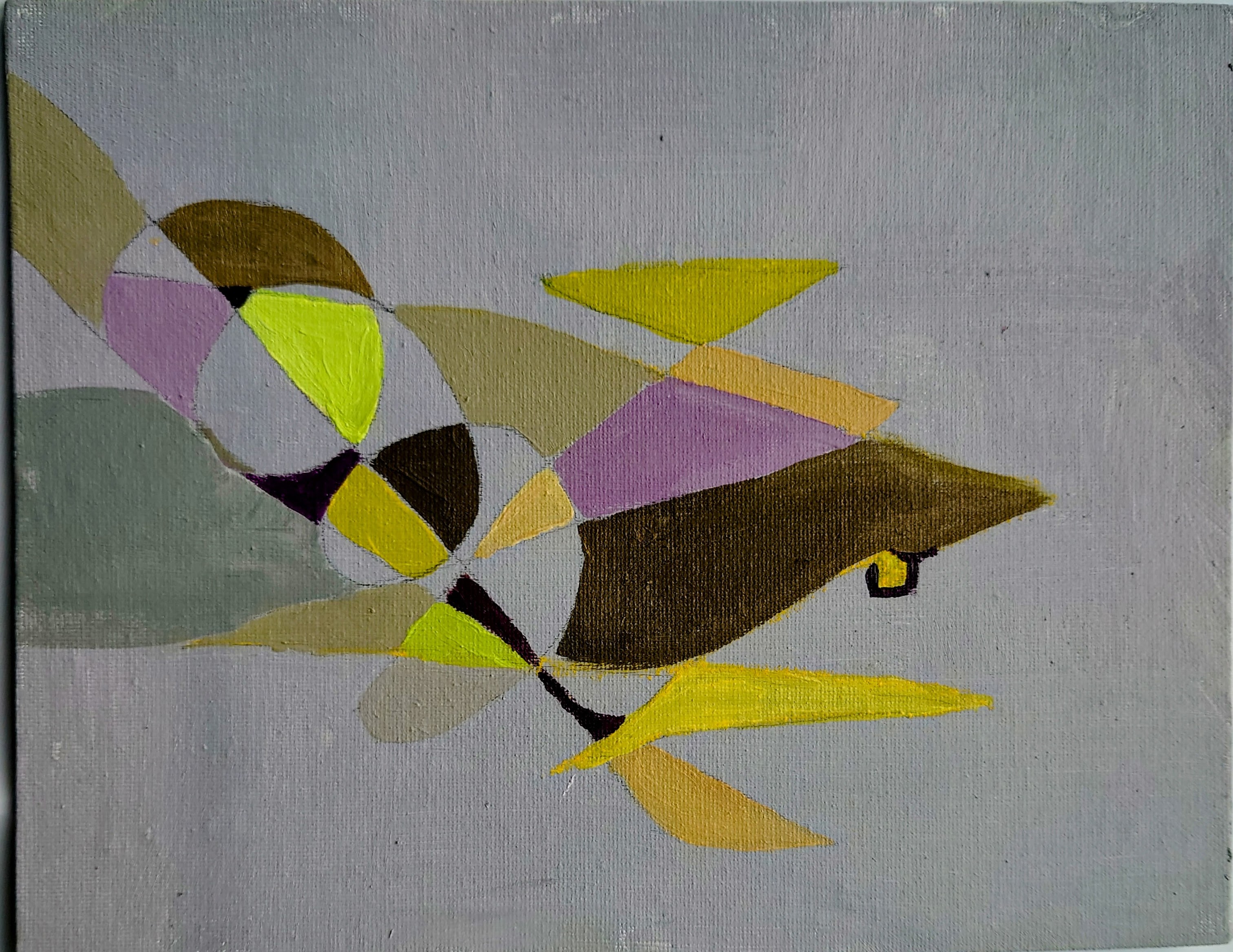
Recently, I’ve started a series of abstract shapes on a strong colour-drenched background with contrasting curvy forms and deep consideration of using analogous or complementary colours.
My contemporary abstract art inspired by 60’s cultural icons. Acrylic on canvas boardMy contemporary abstract art inspired by 60’s cultural icons. Acrylic on canvas board. My contemporary abstract art inspired by 60’s cultural icons. Acrylic on canvas board
I love the combination of sharp and curvey shapes I created. These works show more of the training and reflections I have done recently. I’m looking forward to completing this series and listing them in the shop in the new year by 3rd January 2023. Being able to reflect on my 1960s cultural influences for my paintings is helping to give meaning and express the significance of my work. I never thought I was a mid-century enthusiast, but it seems to be leaking out. My age means that the 1960s, and 1970s did inform my aesthetic principles, perhaps more than I was prepared to admit. But I am happy to do so now. I guess my retrospective journey has led to some fantastical pieces.
Thank you for following my blog thus far. I wish you a happy new year and all the best for 2023. I look forward to interacting with you further down the road.
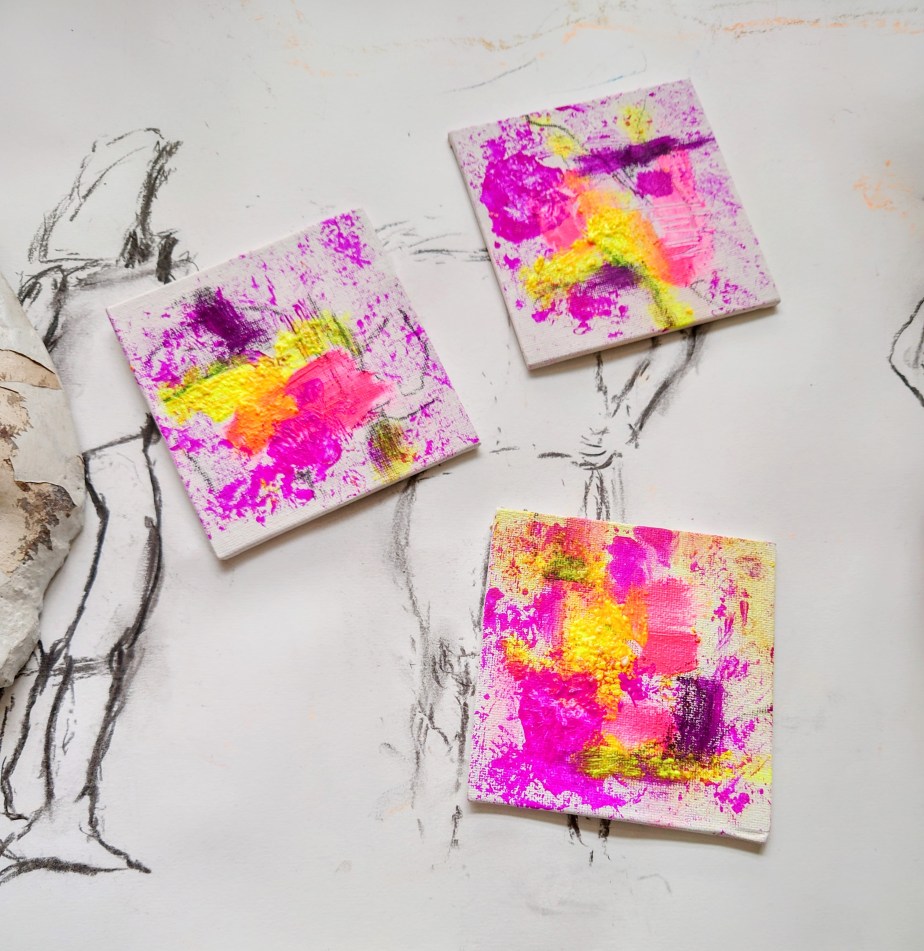
I made a start on a new collection this week. It combines some graphic figures and abstract work. They are on a background of white and have neon and gold iridescence for a fantastical piece that has everyday significance.
Tiny neon paintings for shelf styling in home office decor staging. Mixed media on board.
I love how the light affects neon colours. They are great for bringing cheer and playfulness into my art. They’ll look amazing in a beach house or sunny climate. I’m halfway through finishing these, and when they are ready, they’ll be in the shop soon.
Neon Abstract from a life drawing in charcoal during speed poses. It is becoming a piece related to body dis-morphia
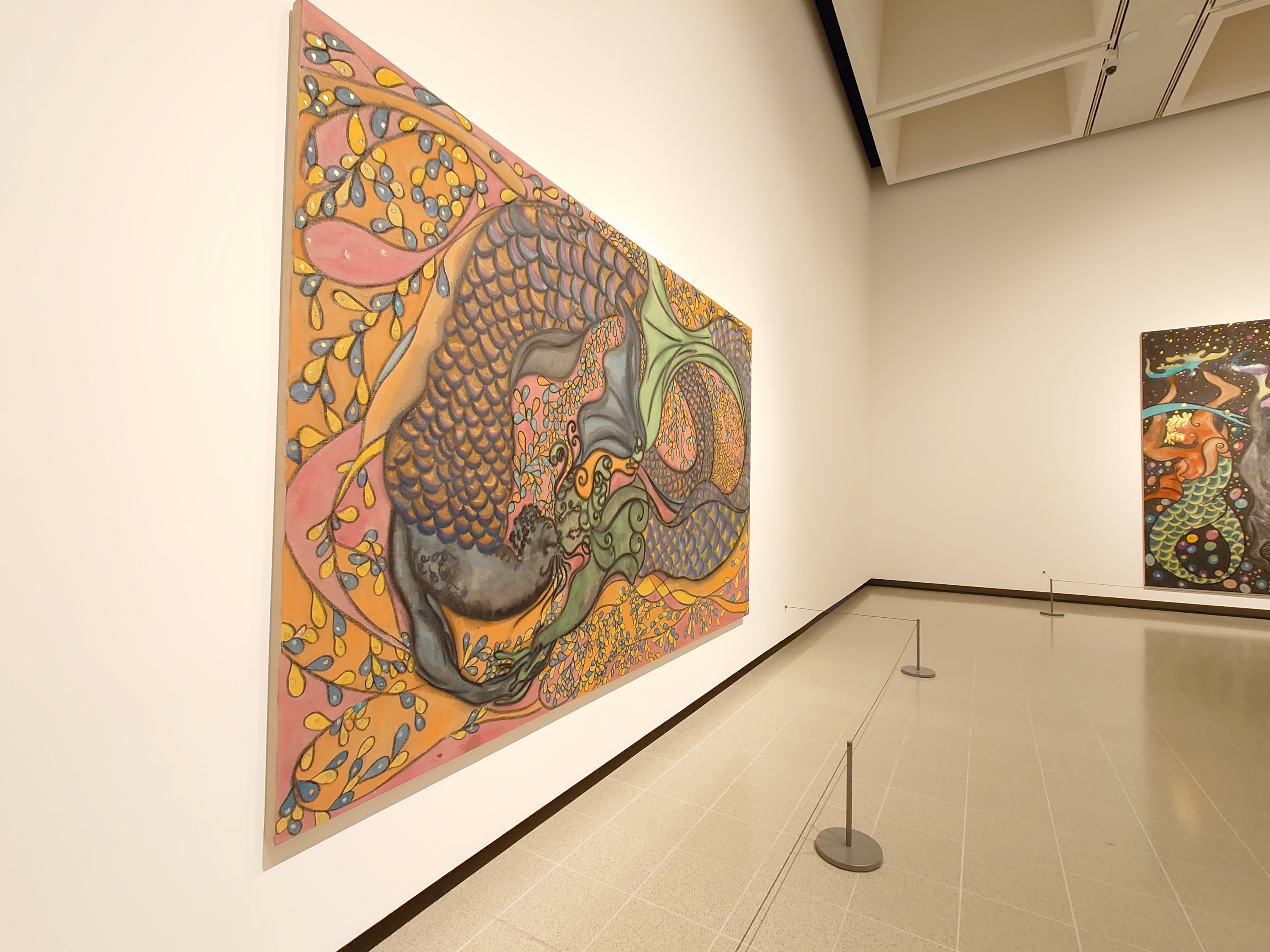
I saw the In the Black Fantastic exhibit at the Haywood Gallery. A big show of artists from the African Diaspora. Including Chriss Ofili, Nick Cave, Hew, Locke and others. Below is the full list of artists at the In the Black Fantastic
Artists at In The Black Fantastic
Wangechi Muto
Lina Iris Viktor
Hew Locke
Nick Cave
Tabita Rezaire
Rashaad Newsome
Ellen Gallagher
Chris Ofili
Cauleen Smith
Kara Walker
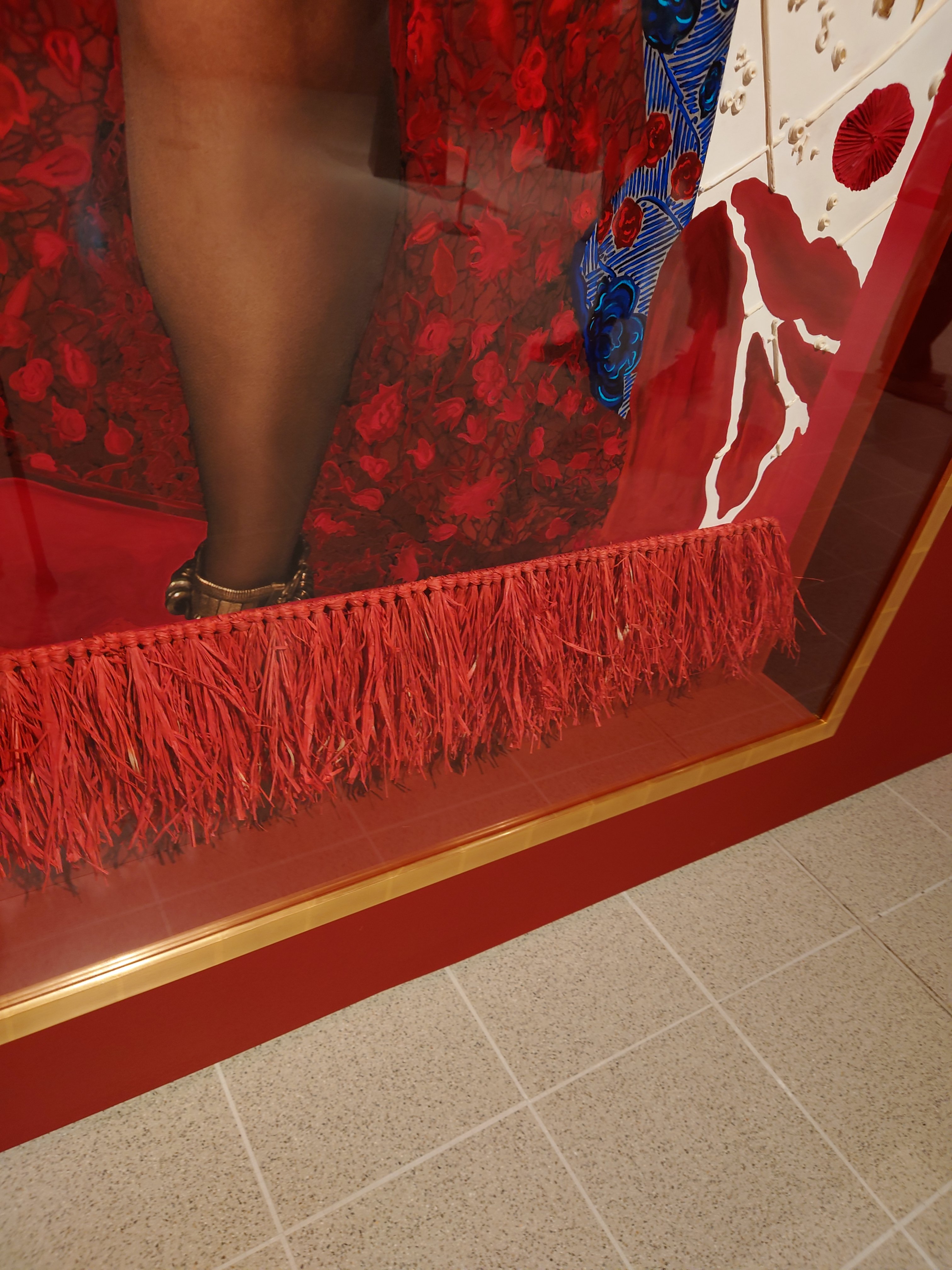
I was excited to feel a sense of affinity developing as I saw the work of these artists. That sense of like mind arose because many of these famous artists used gold or gold leaf, some used gems or Swarovski crystals. I saw gemstones sprinkled and how some used raffia trim as fringing on the edge of a painting. Others used fringing within the painting. I loved the idea of fantastical art as it is an escapist emancipatory healing kind of space to work within as an artist.
I get a sense of hope, but it is not blind hope. It is the kind of surreal conceptualisation of the future that recognises the hurt that has gone before in a beautiful way.
Swarovski Crystals are used to let eyes sparkle
Mahogany and crystals used
Interesting texture with gems
Raffia trim on artwork with 24K gold
24 karat gold, string texture
In the Black Fantastic is showing at the Haywood gallery London until 18th September 2022. It is a little awkward to get there. The nearest entrance is on the south side of the Waterloo bridge,













 Home Office Charm
You must be logged in to post a comment.