

I had a pile of work to do and spent some time doing the housework, which felt cathartic. But I experienced guilt because I wasn’t doing the additional work I promised I would do to aid my 9 to 5. I looked up and caught a glimpse of a spider web that must have appeared recently. Seeing this gave me a moment to pause.
I paused because I was strangely struck by the beauty of the spider web. The more I looked at it, the more I was intrigued by the amount of work that such a tiny creature might have to do to create such intricate patterns through its mastery of weaving.
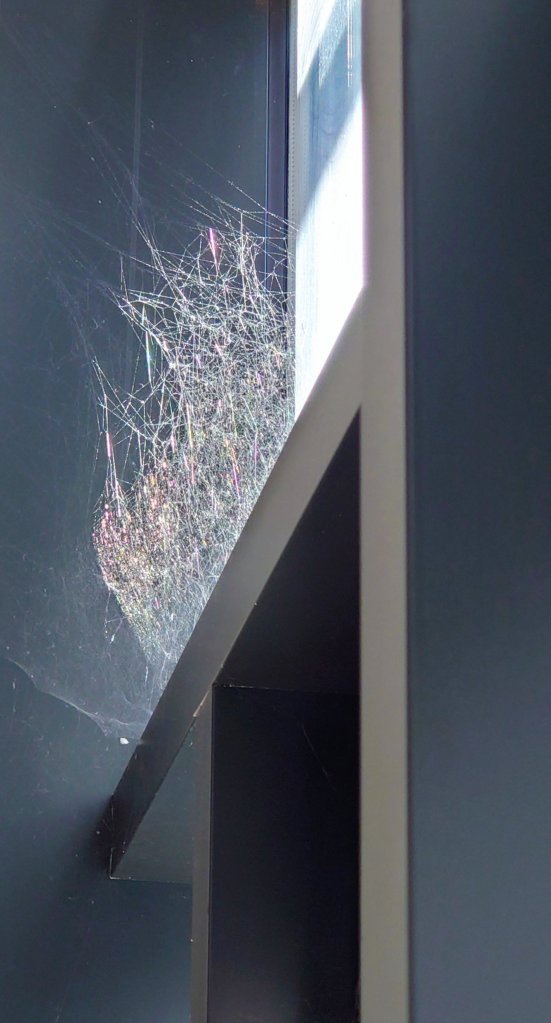
I appreciated the thought (if spiders think) in designing the breadth and depth then the shape of the web. I also particularly admired how the sunlight captured what must be hundreds of little notes and intersections of the spider’s web, which made them glisten, emitting all the colours of the rainbow.
They looked like nanocrystals and reminded me of my love for the light in the vintage Swarovski crystals I used to use.
It really was a delight to behold. Seeing the spider’s web was a chance to observe natural beauty and the wonders of a world of creativity that does not come from humanity.
I was transfixed for some time. So took some photos of this incredible piece of installation art created by a spider.
Do not ask me what kind of spider it is. I suspect it might be the kind that enjoys the inevitable spider mite flies around my Calathea and Strelizia plants.
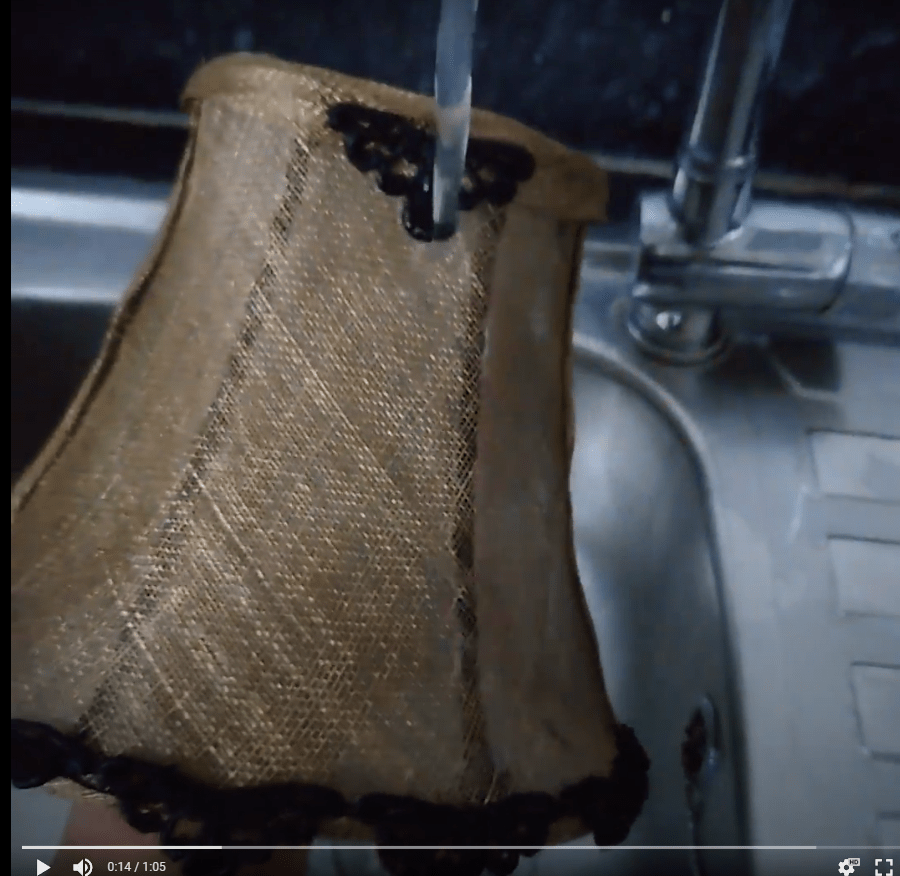
Later in the day, my reflections on the spider’s web produced some ideas for a new line of products. I thought of a way of fusing everything I love to do and weaving my artistic talents with my desire to finish working on those lampshades I had shamefully half made over a year ago. I had suffered from makers block and was dragging my feet towards completing them. But I got my maker’s blank unblocked by being mesmerised by the connections made in the spider’s web.

The sketch shows what the spider’s web gazing taught me. It is an outline plan of three types of new surface designs for lampshades painted with masking and dripping so that the original fabric appears as an underpainting. The masking can aid more graphical forms to appear on the upper paint layer to signify monograms, names or shapes.

 Home Office Charm
You must be logged in to post a comment.