This week, I went to a nice office space in London. You can see that some of the fixtures and fittings nod to the architecture. At first glance, they give off an air of coziness and comfort. Very welcoming for visitors and gives you a sense of being a great place to work.
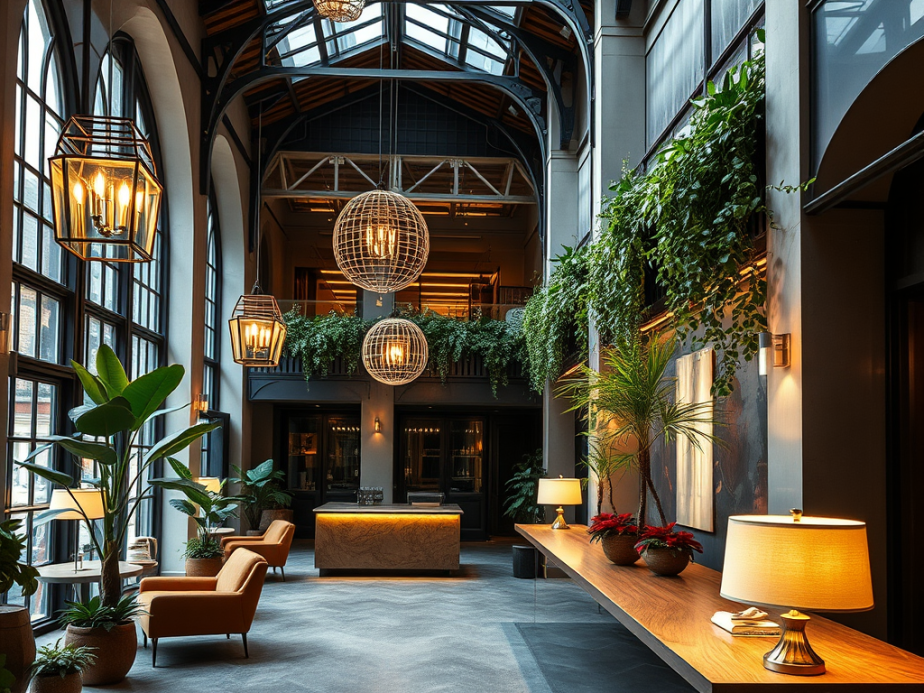
I also visited a local hotel for my Birthday. While I was at the reception waiting for my family to return, I did some people watching. I noticed a pattern in styling the lamps and floor lamps there, too.
The lighting was closely intertwined with botanical elements. This created interesting shadows and shapes. It seemed to enhance the structure of the original lighting. It gave off an air of consciousness about nature, the environment, and the planet.
The video below I took when I was people watching in a hotel shows:
Reception areas: the curated threshold where first impressions land. Botanical spill from corners, carefully selected to whisper “we care.” Earth tones, soft lighting, ergonomic chairs—all designed to wrap visitors in the illusion of wellbeing.
But then, I stay a little longer. I ask questions. I meet the people behind the desk and beyond the break-room. I watch the team dynamics. Servers struggle to keep up.
And I begin to wonder—are we decorating over discomfort?
The lush ferns say “eco-conscious.” The velvet sofas say “psych safety.” But I’ve noticed that behind the foliage, the culture doesn’t always flourish as much as the greenery does. I talk to the workers. In some places, it seems that the aesthetic of care has replaced the practice of it. Cozy decor doesn’t always mean corporate kindness. Indeed, green doesn’t mean that the management is grounded.
True sustainability starts not with plant walls—but with people.
I hope to demonstrate that I have created shelf art and wall decor. This art beautifully illustrates the ugly reality of corporate work. While working from home, we can express ourselves through our choice of decor. We can also quietly convey the complexities, tensions, and messiness that our fantastic work emerges from.
Re-imagine your work-from-home space through the lens of truth.
My products are meant to feel like a breath of fresh (and slightly rebellious) air. They are created as pieces that don’t just sit pretty, but speak (like me). They offer a kind of visual activism. It is right at eye level for your bookshelves. This way, you can lead through the screen with authenticity.
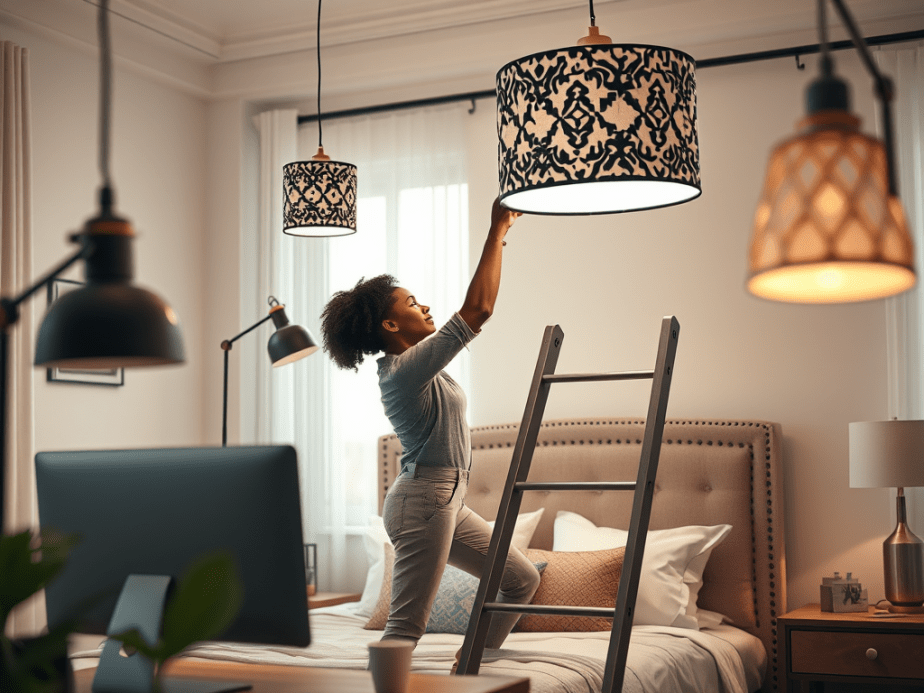
This week, my YouTube video addressed a question from one of my subscribers. They asked for a video explaining how the duplex fitting can be used. I show how they’re used to suspend a lampshade from above. Lampshades can be suspended from a ceiling cable or wires on either side of a bed. We often see the suspending of smaller lampshades in industrial-style or fishing rod-style floor lamps.
In the video, I show details of the spider attachment. You get to see how I easily swap over various styles of lampshades. It’s less bothersome to do the same with the usual fittings.
Please ensure your lampshade has the duplex fitting when you buy from my shop. This ensures ease of swapping over. This enables you to use an empire shape. You can suspend it from above or place it on top of a table lamp.
Below is a bonus video showing how the same duplex frame on my Empire lamps can also be used as a table lamp. In essence, you don’t need to turn the lampshade upside down.
This week I worked in an amazing training room up in Scotland.
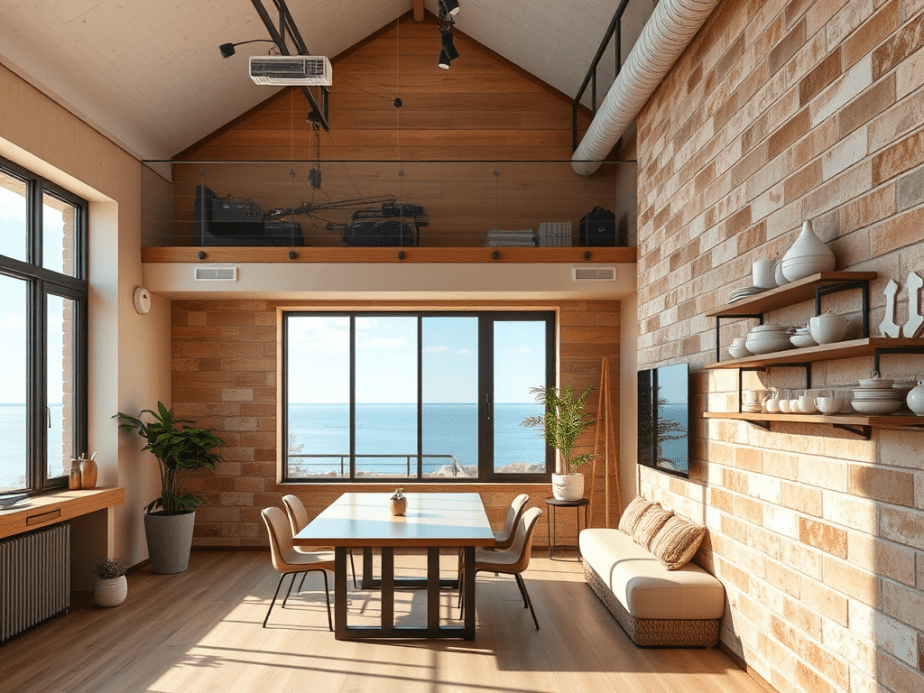
The beautiful and comfortable meeting space was on the Mezzanine and considerately designed by an architect. It had beautiful view of the sea.
The materials used for building the structure and decorating were also fascinating.
Some of the walls were made of painted straw board and massive bricks of pink salt, which gave off a beautiful light, and it felt good for my well-being, too.
I loved that the room had an eco-friendly vibe, which you could see when looking at the painted stringboard. The stringboard walls also gave it an industrial edge, and the painting of the stringboard made it feel a bit more glamorous than if it was left bare.
I loved the pink blocks of salt used in the wall construction. Apparently, there are many benefits to using pink Himalayan salt as a construction material, including its being inflammable, great for acoustics, creating healthier indoor environments, and reducing pollution.
The design and materials are fascinating because salt bricks are used a lot in spa salt rooms (spaces I used to know well).
From this, I began to understand why the space was good for my well-being. https://pin.it/69njtGSGy. I felt nostalgic and joyful when I realised a designer had considerably considered inner wall construction for building, aesthetic, eco, and well-being reasons.
Salt rooms have a range of untested physiological benefits, such as fighting infection, clearing coughs, and reducing stress.
I also liked how they used giant pink Himalayan salt discs to make the table’s legs.
Another innovative feature of the décor and design was the wall of pots that adorned the main wall. This cute crockery collection offered subtle branding for the business but, most importantly, emitted creativity, camaraderie, and cosiness.
The wall of themed crockery, I imagine, acts as a fantastic backdrop for when they are doing virtual meetings.
Overall, because of the many innovative features I found in this training room, it is one of the more remarkable spaces I visited to facilitate learning workshops this year.
Visiting this space, this week helps to justify integrating more natural elements in decor items in the future. Potentially looking at new ways to integrate pink salt into my making and shelf decor items. I shall also look at collections of items with small words that buyers can use on their walls for more meaningful virtual meeting backdrops.
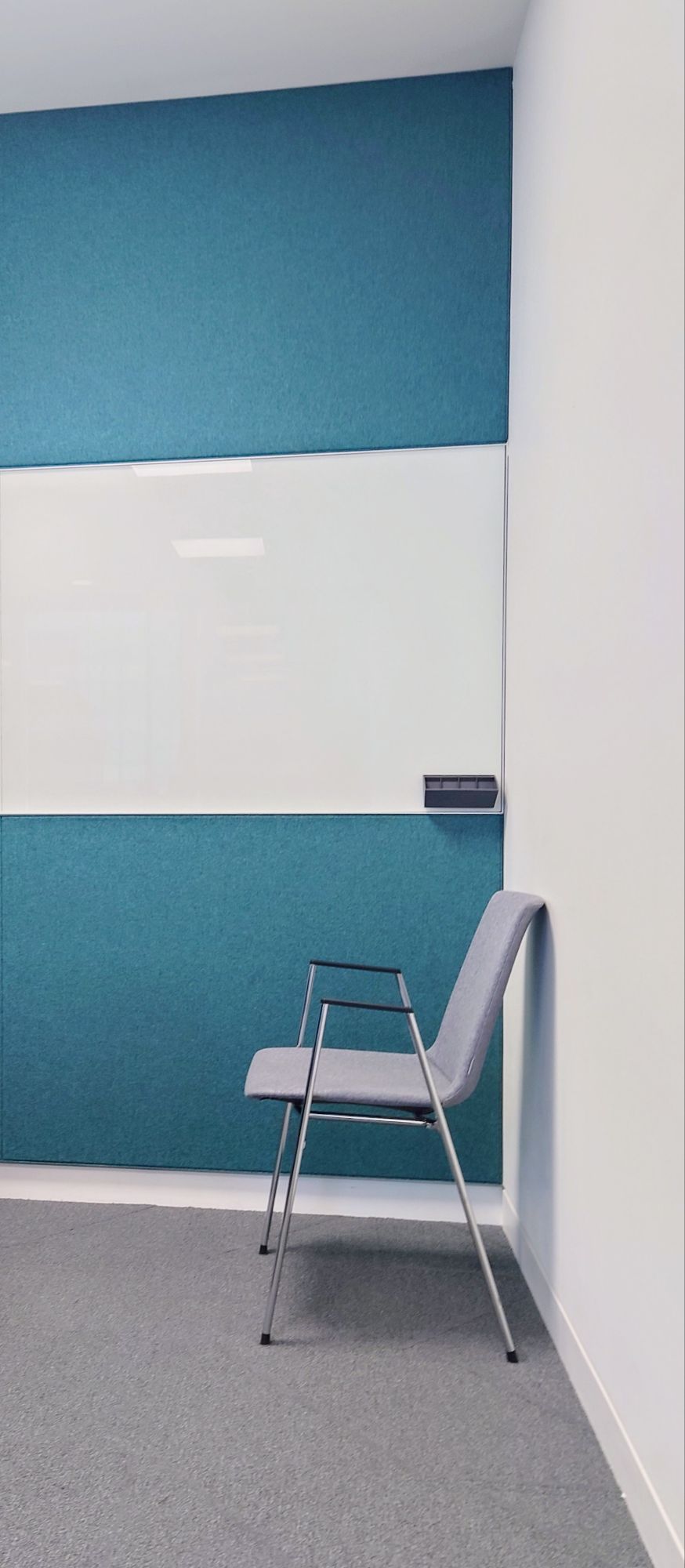
But recently I was impressed when I visited one major international corporation in the business district of London and saw a well thought out design scheme for delivering learning.
The whole space and training rooms were all thoughtfully designed to inspire and lock in the learning and development of their talent. Read the captions in the images below to discover how the design details support learning.
Whiteboards that run the length of the room.A functional mix of fabric and glass for soundproofing and capturing thoughtsRest and digest areas have words of inspiration and empowerment enshrined
The designers of this training space clearly recognized the importance of walls for facilitating learning. They understood that walls play a crucial role for trainers and corporate instructors in enhancing the educational experience.
This week’s photo blog showcases the impact of wall decor in corporate training room environments. From functional and stylish fittings to the carefully crafted calligraphy on the walls, each element contributes to creating a memorable impression and inspires innovative ways of working.
We can take some of these ideas and incorporate them into our home office wall decor. For instance, having a large poster with inspirational quotes can serve as a personal reminder of how we want to work. Additionally, when planning the treatment of our walls, why settle for plain paint? Consider creating a space that includes a glass panel for chalkboard sessions with your team. This setup encourages more interactive meetings and gives leaders and managers a reason to turn on their cameras and engage effectively.
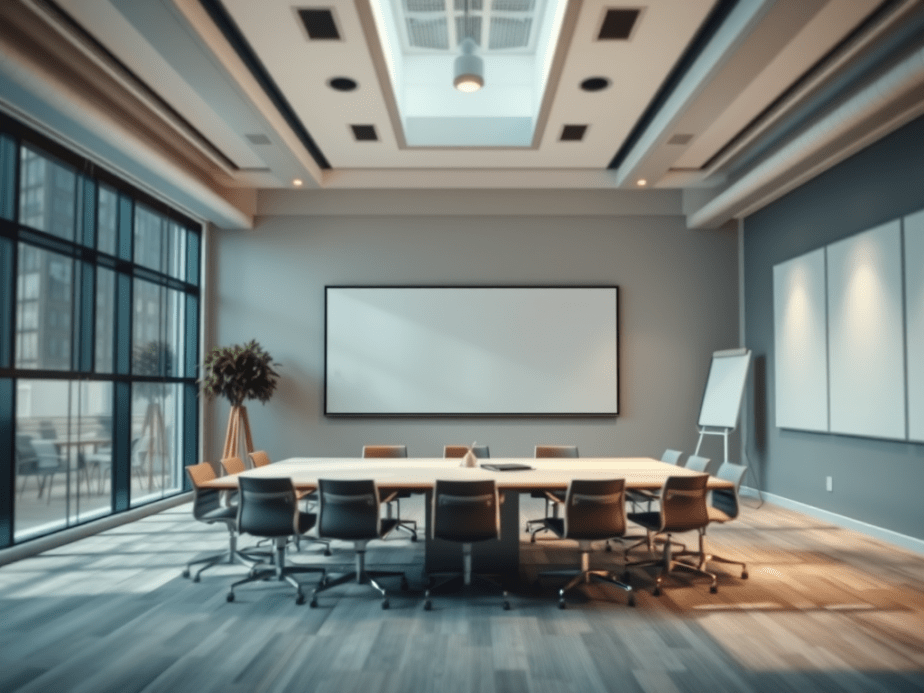
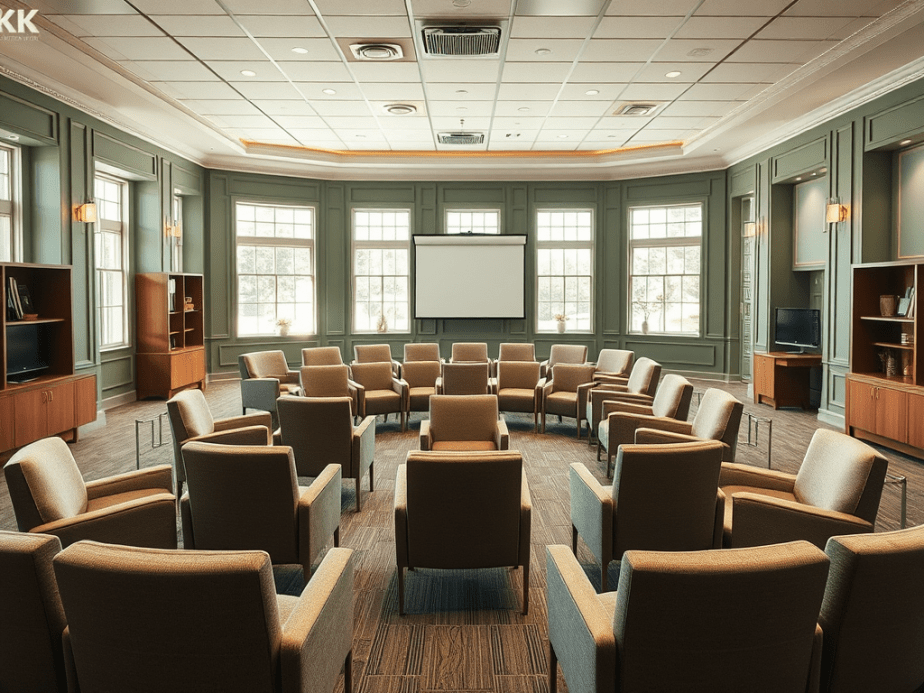
I visited a beautiful training room this week but it was hiding several problems. The issues found made me want to share some tips on training room design for architects, interior design team, facilities managers.
The beautiful training room I visited had fancy comfortable seating, very nice wide desks on wheels, natural looking carpet all the modern technology with two big screens in the front that I could can easily log onto. There were also two beautiful side cabinets storing other trainer’s accouterments like post it notes, marshmallows. There was even room for me to store my coat and bags to keep the room tidy.
Image created with AI based on the word in this post
Style over substance: The impractical training room layout
However one thing I noticed about the room, even though it was large, was the lack of circulation space. The session was originally booked for 14 max but they thought they’d squeeze another two people in. This meant that arranging tables in a U shape pinned everyone to the walls leaving a large expanse of space in the middle. This is not conducive to group working because no one could move around easily.
Style over substance: Training room walls that would not stick
This beautiful training room had deep sage green walls stylishly painted up to seven eights of the wall with a coordinating ivory colour for the last eighth and the ceiling. It reminded me of a beautiful cosey shaker style kitchen. But when it came to me sticking full flip charts up to remind learners of the points we had covered so far it could not be done because the walls seemed to be anti tack. I guess somewhere in the building’s history the facilities manager got fed up of trainers using blue tack to stick things on the walls.
Having anti tack walls is understandable if you have previously spent loads of time and resources getting the cleaners to remove blue tack using the recommended direct heat like a hairdryer on the blue tack itself.
But having anti tack walls creates a corporate learning & development and organisation development problem. You see we trainers need the walls to showcase learning. To show case learning is to have a tangible artifact of ideas generated in the session and that is more than one flip chart stand can do.
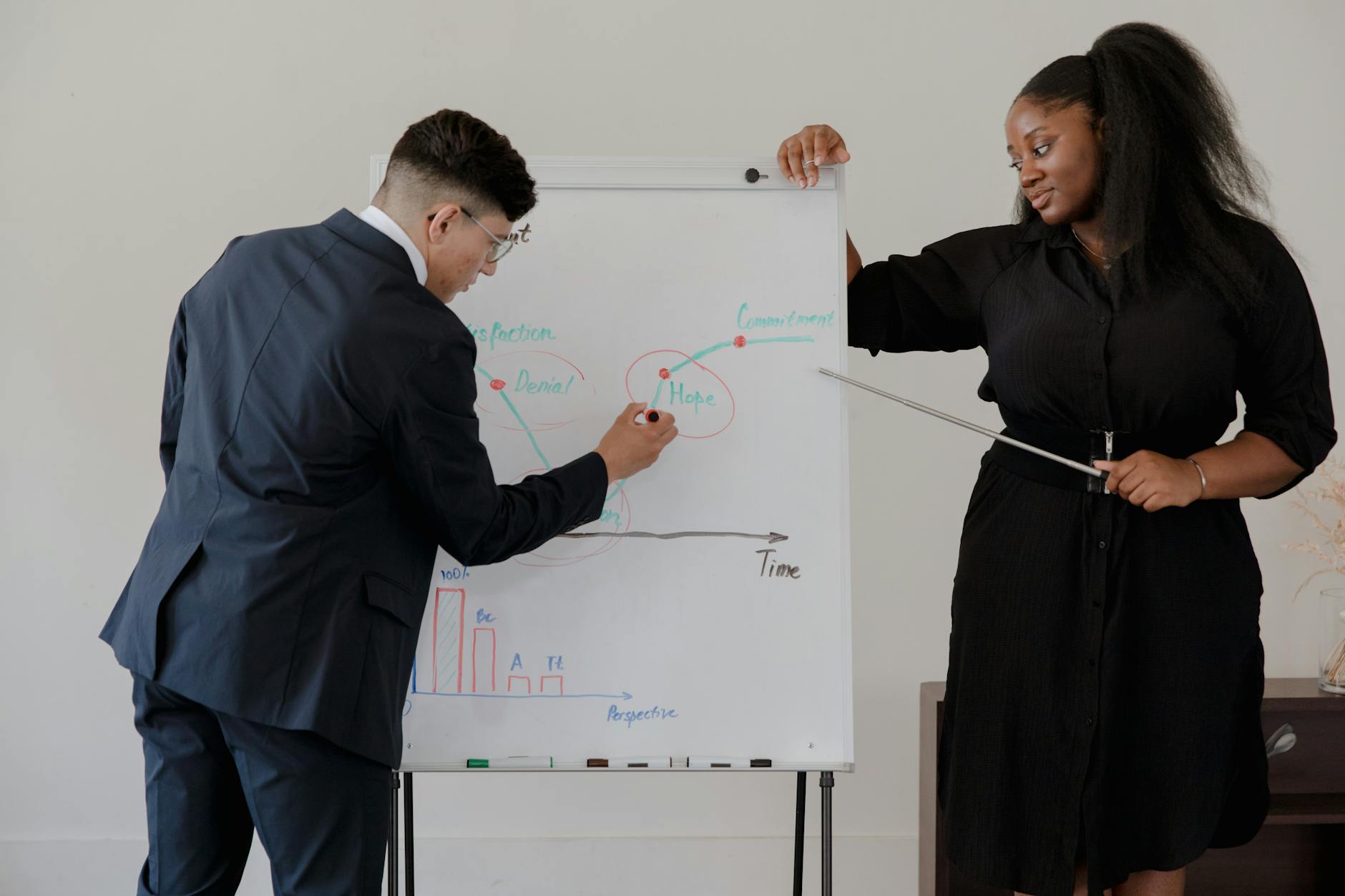
We show case learning in the corporate training room in various ways. We typically (display gallery style) the completed flip charts that everyone has done. Learners throughout the day then reread what some of the ah ha’s and moments of epiphany are within the room at moments that suits them. It helps to reinforce diversity in learning & development.
We use the wall to display analytical and creative thinking when working in a group. Walls help to magnify the writing space. Walls expand the written canvas from the individual’s perspective out to the group’s perspective.
Therefore a training room festooned with used flip chart pages and written on post it notes from brain writing sessions, or creation activities or problem solving sprints serves as visible and physical evidence of the individual and group learning work that has gone on in that room.
I’ve seen great examples of corporate training rooms as I travel around the world delivering leadership and management development . The more advanced training room decor takes account of trainers/ instructors needing to use the wall by replacing the inner walls with glass panels and providing white tack for the rest of the walls. .
Glass walls are then perfect for sticking sticky flip chart or post it notes to the walls. I’ve also seen other kinds of vinyl decor panel used. Learners can even write directly on the glass walls, which support creativity and enhances the problem solving process.
But ultimately it would be great if corporate office training room designers could consider installing more white boards and screens so that opportunities to showcase learning is on all four walls, without the need for desks.
Image created with AI Prompt corporate training room like featured image but with screens one windows and all walls with glass wall looking out to greenery and big plants internally. And comfortable seating for eight.
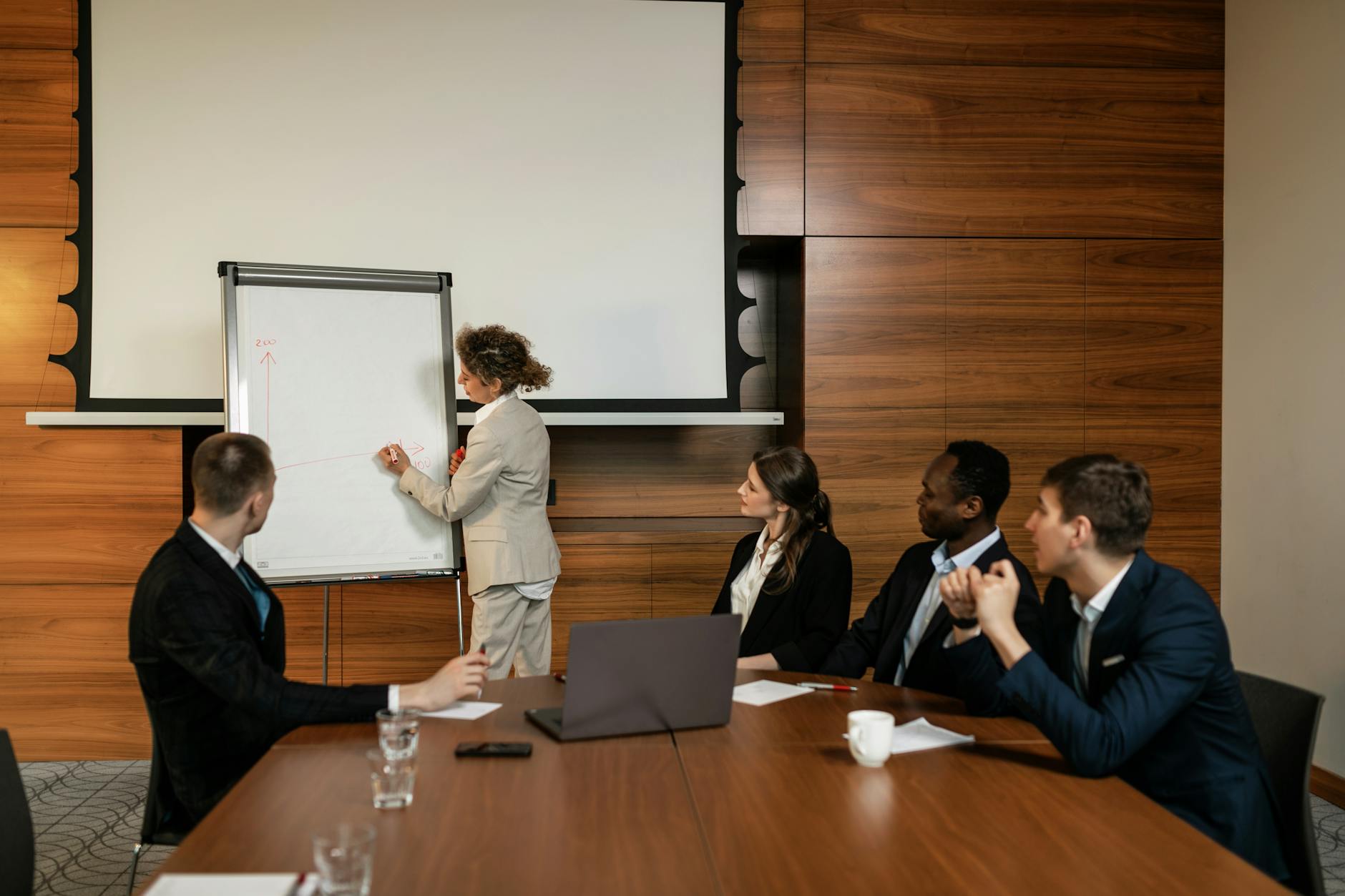
Leadership and management development consultants/instructors and trainers are now in an era where, we no longer want to get managers in a room where they just sit and stare at one square light at the front of the room for six hours.
Image created with AI prompt corporate training room in U shape without desks
We no longer want executive development shaped by the the training room’s limitations. Indeed some of the problems that companies face with with building inclusive working, collaboration or the depth of thinking that is required might be down to the amenities of the training room. The training room is a visible cultural artifact subtly symbolising “the way we do things around here”.
How professionals can make training rooms add value
We now need interior designers and architects of corporate headquarters, campuses and head offices to show deeper consideration of the design of the corporate training room. See my top 10 tips as a summary of this post.
10 Tips to Improve Training Room Decor & Design
Room aesthetics are important but should not devalue function
Create a room with a view of nature
Design in glass panel walls to showcase learning
Plants are nice for oxygen and neuro-aesthetics
Cabinets could be built into walls so they don’t get in the way of circulation space needed for group work
Integrate screens on three walls
Install whiteboards on three walls (if no glass walls)
Design, plan and build writable four walls
Enable table or desk free room for management development suites and executive development zones
Always consider how the training room acts to symbolise the desired culture
Please follow for more. Each week for the rest of 2024 I shall be visiting corporate training rooms of all shapes and sizes up and down the UK. I will post more ideas about best practice and ideas for improvements to corporate training room design, decor and space planning, in the weeks to come.
Comment below on your good or bad experience of corporate training room decor.














 Home Office Charm

You must be logged in to post a comment.