My pictures paint a thousand… faces

My art class this week got us to practise our portrait painting with a live model. It was the first time I painted a portrait. I had always been nervous about painting humans. I somehow felt incompetent.

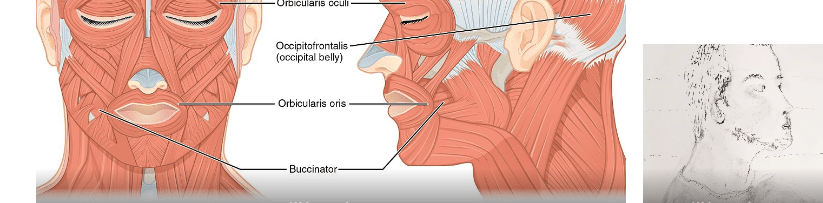
But I realised I had been here before when I got into it. Flashback: I trained to become a beauty therapist when I left school. And no, I was not a beauty school dropout. Instead, I did well. But what people don’t know about beauty training is the amount of anatomy and physiology you must learn. I had exams in the skeletal and muscular systems and cross-sections of the skin. When I told the art teacher about this, I found myself recounting the Latin names of the muscles of the face. Surprisingly I even told her about each muscle’s insertions and origins. Didnt realise I still remembered those pesky exam type answers.

It was illuminating how my prior experience of understanding what is happening behind faces and below the skin surface was really useful for my drawing. I also remembered the story of Leonardo Da Vinci studying anatomy. It seems he used to study cadavers. But my study of faces was not of dead people. They were the heads of 1000 facials I had done in my 20s in salons and spas in London and around the world.
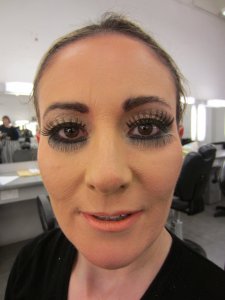
It was nice to get encouragement to continue still-life drawings. I shall.

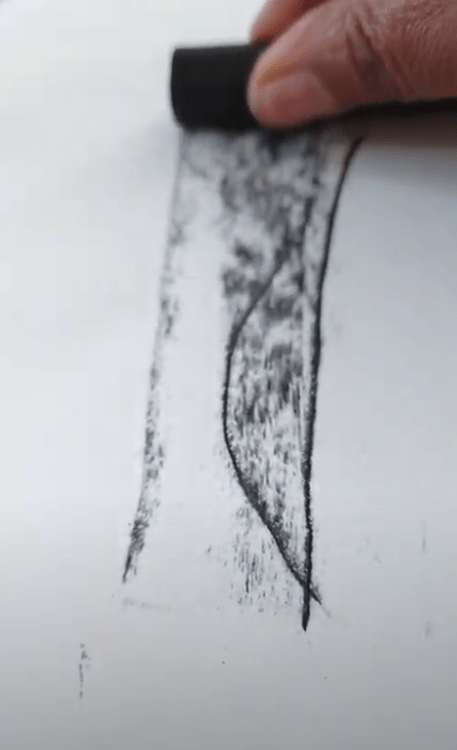
An unfinished life drawing of a life model in charcoal.

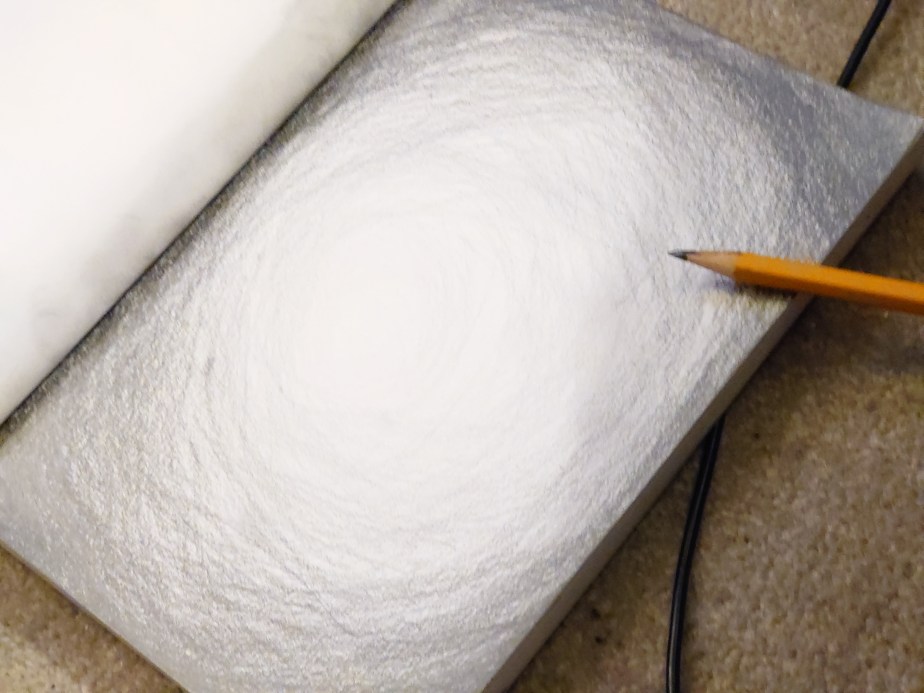
There is Still Life in My Pencil

I’m growing more confident and intrigued about my mark-making. I am confident because I managed to get some tutored practice last week at my regular new art classes. It is enlightening to see my finished works against others in the still life class.

Some artists go for realism, where their sketching looks exactly like a photo of the object. I’m in awe of those. However, others like me don’t. I struggle with getting it real. It might be that I don’t have the patience or the looking skill. But when I complained that my marks were not exactly like the set up to my teacher, instead of giving me tips to make it more real, she said that was what Van Gough did. This linking of my marking type to an old master reassured me. It also made me curious to see more of Van Gough’s work. Some of my favourites from Van Gough are below. I like the milk jug. As you can see, I show the screen grab with a ring around my favourite of his illustrations.

Inspired by nature’s little crafters

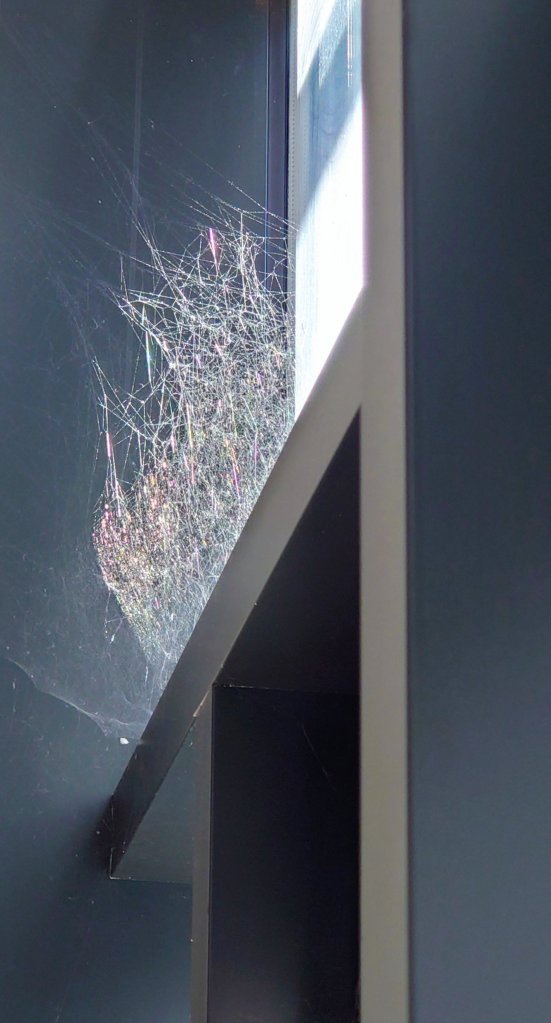
I had a pile of work to do and spent some time doing the housework, which felt cathartic. But I experienced guilt because I wasn’t doing the additional work I promised I would do to aid my 9 to 5. I looked up and caught a glimpse of a spider web that must have appeared recently. Seeing this gave me a moment to pause.
I paused because I was strangely struck by the beauty of the spider web. The more I looked at it, the more I was intrigued by the amount of work that such a tiny creature might have to do to create such intricate patterns through its mastery of weaving.

I appreciated the thought (if spiders think) in designing the breadth and depth then the shape of the web. I also particularly admired how the sunlight captured what must be hundreds of little notes and intersections of the spider’s web, which made them glisten, emitting all the colours of the rainbow.

They looked like nanocrystals and reminded me of my love for the light in the vintage Swarovski crystals I used to use.

It really was a delight to behold. Seeing the spider’s web was a chance to observe natural beauty and the wonders of a world of creativity that does not come from humanity.

I was transfixed for some time. So took some photos of this incredible piece of installation art created by a spider.

Do not ask me what kind of spider it is. I suspect it might be the kind that enjoys the inevitable spider mite flies around my Calathea and Strelizia plants.

Later in the day, my reflections on the spider’s web produced some ideas for a new line of products. I thought of a way of fusing everything I love to do and weaving my artistic talents with my desire to finish working on those lampshades I had shamefully half made over a year ago. I had suffered from makers block and was dragging my feet towards completing them. But I got my maker’s blank unblocked by being mesmerised by the connections made in the spider’s web.

The sketch shows what the spider’s web gazing taught me. It is an outline plan of three types of new surface designs for lampshades painted with masking and dripping so that the original fabric appears as an underpainting. The masking can aid more graphical forms to appear on the upper paint layer to signify monograms, names or shapes.

Increasing my Marks

I recently did an intense course at CSM. It was nice to return to UAL, but to be a student this time.

It made a nice change to discard my old identity as of teacher there and allow some time to learn new mixed media techniques and sharpen my painting focus.

The images show the canvases I am working on and the development of ideas.

The work includes photo transfer, collage, dropping, pouring, oils acrylic, resin, quartz, sand and using paint skins. It was good to have an established artist give voice to my ideas and my approach. I feel more confident in labelling and placing the context of my artwork and how it fits into artworks that have gone before.

I learned and developed my technique so much. It was fascinating to note how the choice of support, whether canvas, board, and the type of gesso, are also part of the media as they impact the overall effect and desired look and feel of the painting.

Watch this space (project showcase) for how the course will influence my future paintings. I’ve got so many ideas and cannot wait to share them with you.

On film

The college’s media person captured my making process and came back to ask if I would do an interview that they would film. I declined the interview for a range of personal reasons. But I am happy to say you might catch sight of my hands painting in the future ads and social media content for Central St Martins when they promote their courses.

Moss Art

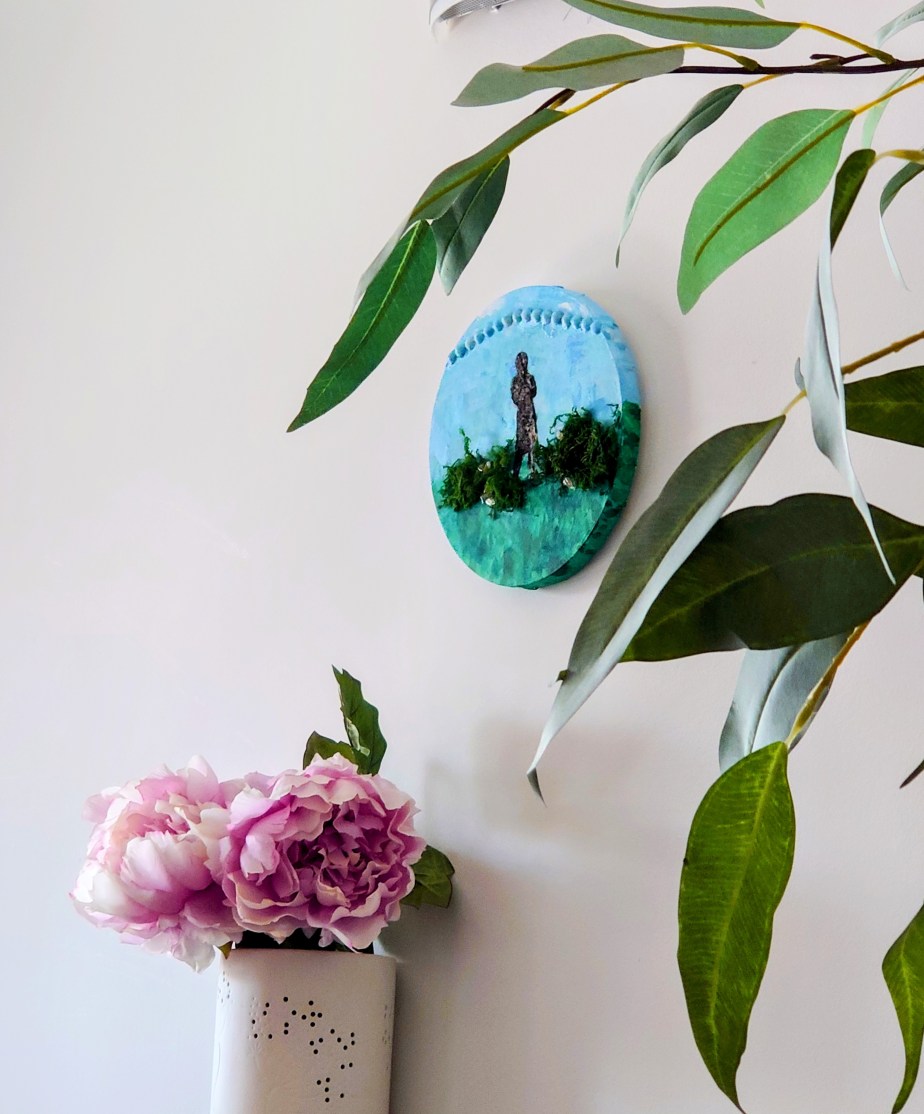
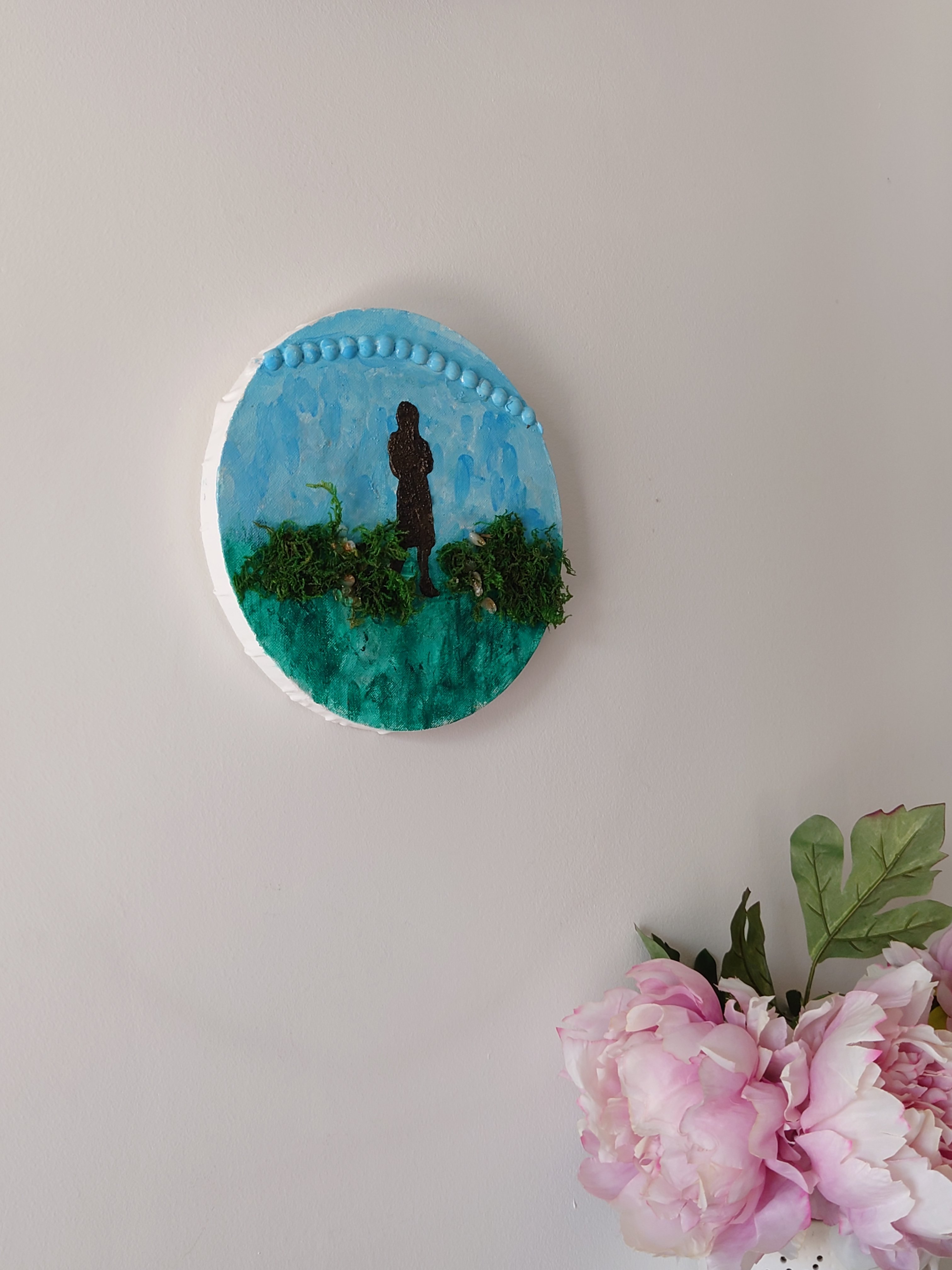
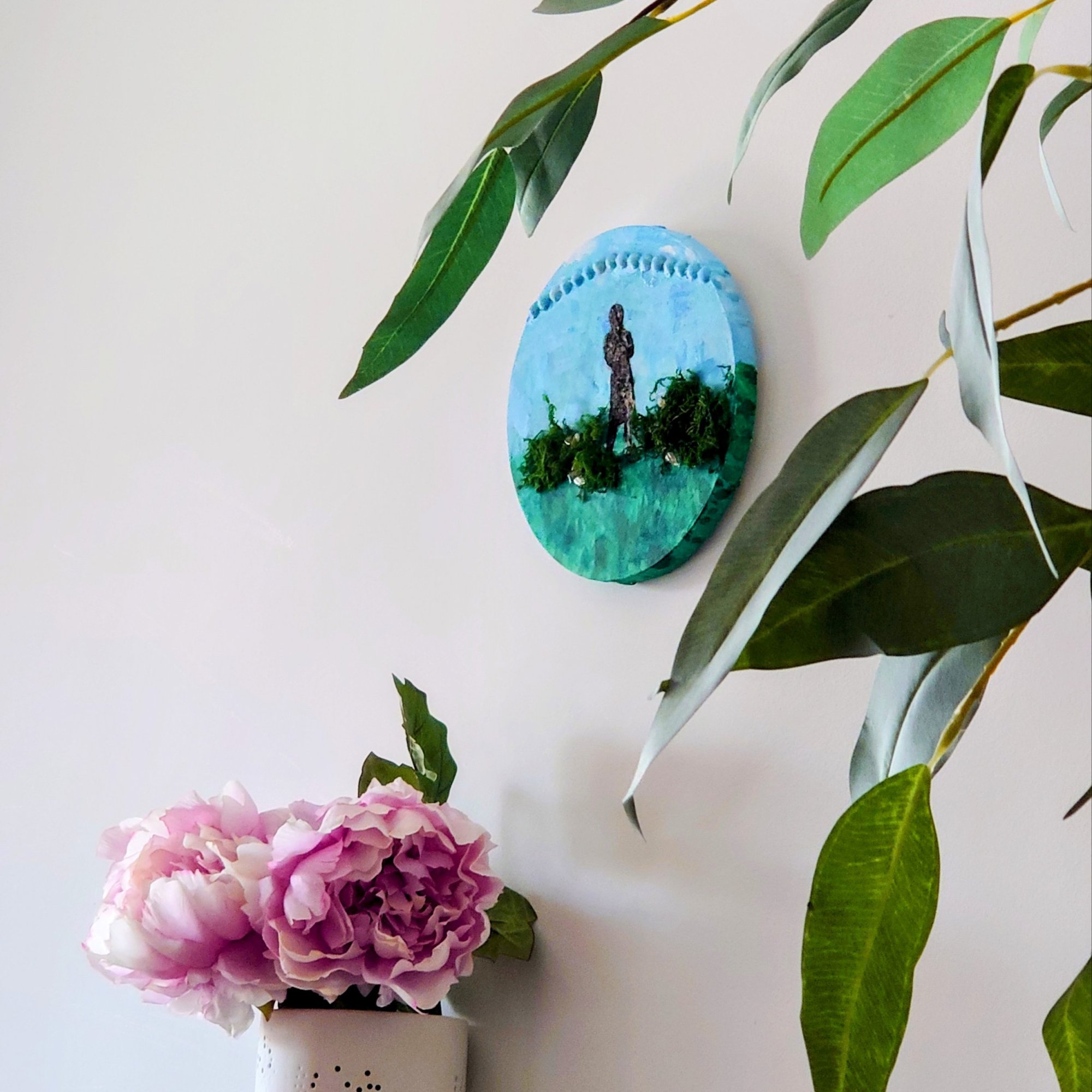
I started painting and using Moss. There seems to be a trend with moss and using it in those IKEA box frames.

But I wanted to do something different. I integrated paintings with moss art. It is a bit of a continuance of the work I do with herbs dried flowers and things like lavender in art.

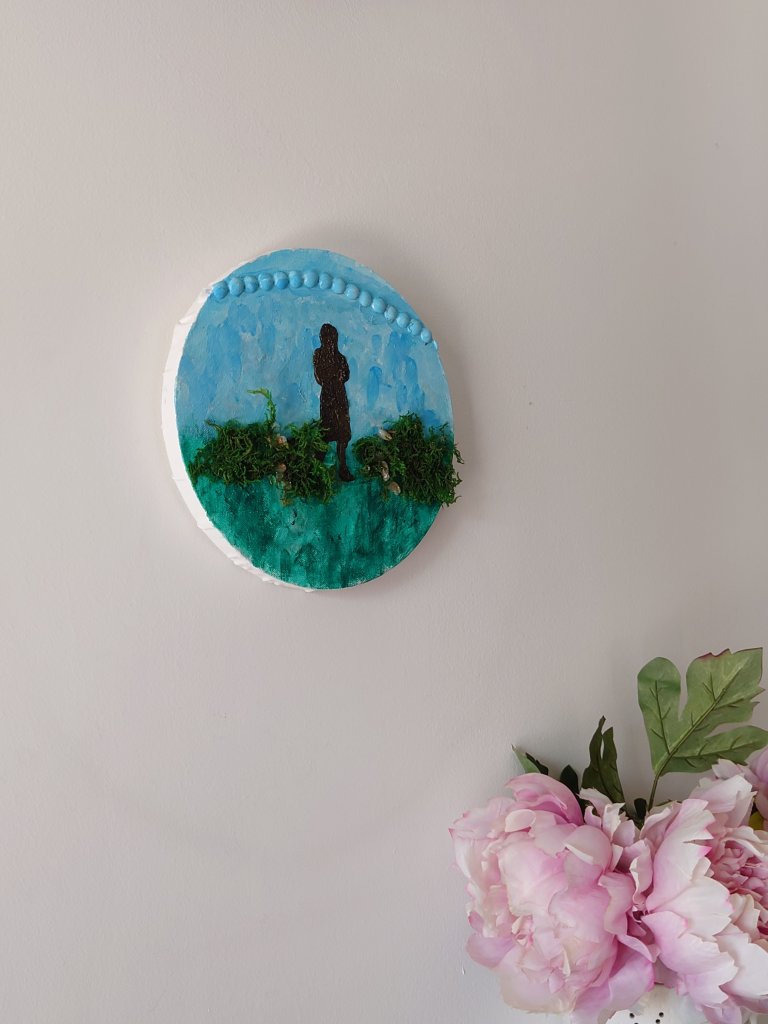
I know I’m not the first person to do it because I’ve seen recently how some of the top website artists and creative people have been integrating dried flowers to make their hair look big. And this picture shows me using moss simply by adding some texture to enhance the grass.

The other thing in this picture that stands out is the texture on the top of the frame. I found a new way of integrating my love of decorative nail trim.

15cm acrylic painting with gemstones & moss and decorative nail trim on a round canvas.

15cm acrylic painting with gemstones & moss and decorative nail trim on a round canvas.