Material Abstraction and Belonging: A Visit to the RA

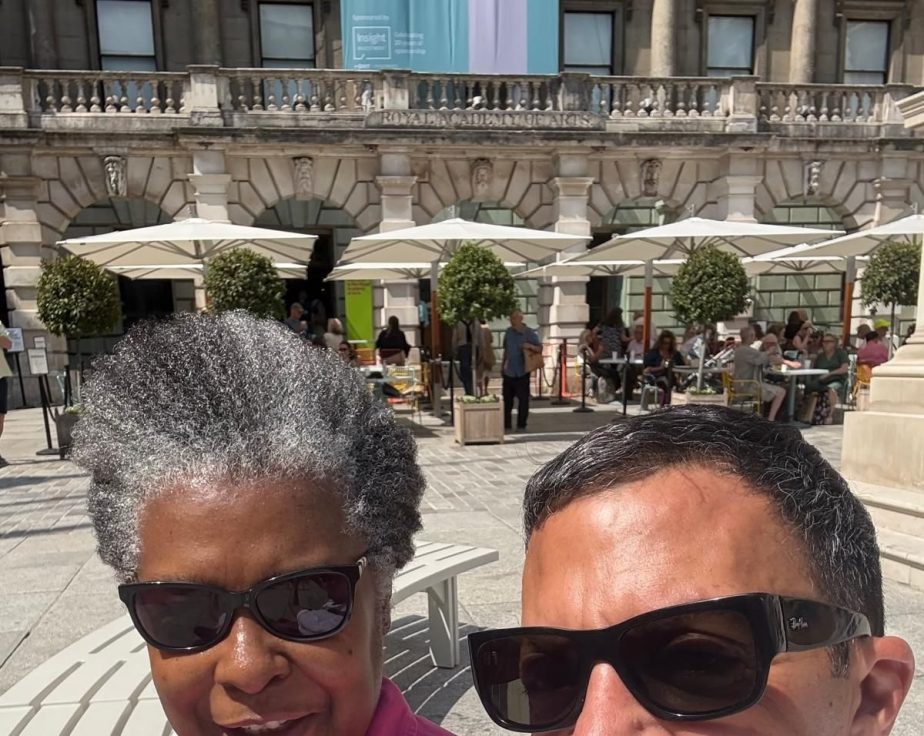
Last week I spent a quiet morning at the Royal Academy. It was one of those visits where you do not go to see art so much as to feel something shift inside you. I filmed a short piece for YouTube called Finding Space at the RA, capturing a moment of stillness in one of the galleries. It was not planned, scripted or staged. It was simply a pause, a breath, inside a room full of colour, texture and human intention.

As someone who works with paint skins, dimensional surfaces and the emotional life of modern work, I am always drawn to spaces where art creates a kind of psychological room. I have been exploring where my work sits in relation to artists like Angel Otero or Kennedy Yanko, and the RA visit helped me feel that connection more clearly. The RA does this beautifully. Even in the busiest exhibitions, there are pockets of quiet where the atmosphere changes and you can sense your own thoughts rearranging themselves.

This visit carried another layer. I have been exploring where my own practice sits within the wider field of material abstraction, especially as I search for other artists who work with skins, poured surfaces and dimensional paint. Walking through the RA, I found myself noticing affinities. The way certain works held space. The way colour behaved under light. The way material choices shaped emotional tone. It reminded me that belonging is not always about finding exact matches. Sometimes it is about recognising echoes.

That is what I wanted to share in the short video. The feeling of stepping out of the noise and into a space that holds you differently. A space that softens edges. A space that lets you think, and lets you locate yourself.

In my own practice, I am exploring how colour, materiality and dimensional surfaces can create that same effect in everyday environments. Meeting rooms, workspaces, places where people gather to make decisions. The RA visit reminded me how essential these moments of spaciousness are. They are not decorative. They are not optional. They are part of how we stay steady, present and connected in the rhythm of working life.

If you haven’t seen the YouTube Short yet, you can watch it here: Finding Space at the RA

I will be sharing more reflections like this. Small moments, quiet observations, and the ways art helps us navigate complexity with a little more clarity and warmth. Sometimes the most meaningful shifts happen in the pauses.

Why this matters

In leadership development and executive learning, we talk a lot about clarity, presence and psychological flexibility. These qualities do not appear out of nowhere. They are shaped by the environments we inhabit. Art can create the conditions for better thinking. Calmer nervous systems. Softer interpersonal edges. A sense of groundedness that supports wise decision making.

If moments like this resonate with you, you might enjoy the chromatic material pieces I am developing for workspaces. Functional sculptures, paint skin lighting and dimensional surfaces designed to bring clarity and emotional presence into everyday environments.

And perhaps most importantly, I left the RA feeling encouraged to submit next year. A small but meaningful step in claiming my place within material abstraction, and continuing the search for where my work belongs.

How Bruce Springsteen Inspired My Creative Process

I’ve just seen the Bruce Springsteen biopic (Deliver Me from No Where) at my local cinema (Act One). I rushed out on Friday straight after work to see it, catching the early evening show starting at 5:40.

Just one other person was sitting in screen one. Or was it screen two? I was delighted to have the screen to ourselves. Yet I was still worried about disturbing the person in the next row with the rustle of my crisp bag. Although we had the screen to ourselves, I noticed how Act One Cinema is buzzing these days. They had a sell-out event in the lounge. I expected to see a fuller theater. I began to wonder why there weren’t more people attending. There were only two of us watching. This turned out to symbolize a parallel experience to the main story in the film. We were two lone viewers watching the film about Bruce Springsteen’s solitary segment of his journey as a songwriter. We were thus not alone.

I imagine that the film’s marketers would say that I might not be a typical fan of The Boss. This is because I am a 60+ black British female. I deduce this because I rarely see people who look like me in the video glimpses I catch of him singing to his massive audiences. But. I’ve always loved the Rolling Stones. I have even been to their Hyde Park concert in the early 90s. Nevertheless, I never went to a Bruce Springsteen concert.

I received the Act One cinema newsletter announcing the film. Instantly, I wanted to see the movie and booked it.

The ticket booking then took me on a nostalgic journey. I remembered days playing some of Springsteen’s popular tracks on a couple of albums. This was while I worked in Qatar many decades ago (early 80’s). We played Springsteen tunes at dizzy expatriate parties.

I also played his album during moments when I felt alone there. The songs provided comfort when, as a 22/23-year-old, I was far away from home. Many of his lyrics expressed my feelings about home. They made me realise I missed my home folks. They also highlighted my need to celebrate identity. I felt this way even though I wasn’t born in the USA. During those lonely times, Bruce Springsteen’s songs made me feel connected and uplifted.

unmemorable purchase

When I think about buying the album on cassette, I now wonder if it wasn’t a knockoff from the souk. Or perhaps it was an acquisition made during a frenzied shopping moment at the airport duty free. This could have been during one of the trips we did to Dubai or Bahrain. I certainly didn’t buy the Bruce Springsteen album in a cherished way from Tower Records. It wasn’t bought from HMV on Oxford Street. And it definitely wouldn’t be a connoisseur-like buy of a vinyl album. Back in those days, vinyl was what your dad’s music collection was on. Cassettes were the thing in the 80s.

The no Bruce years

When I came back to the UK in 1990, I don’t think I played any more Bruce Springsteen tracks. I recall one cheeky friend critiquing and questioning why I had Bruce Springsteen in my music collection. Then yesterday, I listened to the Nebraska track on Spotify. I was inspired to do this after watching the movie on Friday.

Making sense of the story

This morning, I watched a review of the Springsteen film on YouTube. It was by Mark Kermode and Simon Mayo. They, too, seemed to enjoy watching the film. The reviewers wondered whether the film that was centred on a specific part of Bruce Springsteen’s life had mass appeal. They thought it might be too nerdy among a couple of other things.

I can answer their query by saying that the film did indeed appeal to me. This is true even though I am outside the artist’s obvious main catchment group. I found observing the film’s depiction of Bruce’s creative process mesmerising. It was also very connecting. It really gave me a boost and encouragement around my own creative process. I resonated with the solitude and deep reflection shown in his music writing. He makes cultural connections using TV, film and news. His songs also draw from architecture and childhood memories. These inspirational elements resonated with me. Bruce Springsteen helped me feel less alone about my creativity once again. This time, it concerns the journey and who should be there in my creative process.

Antecedents to the creative process

In the film, there was also an important piece about subconscious messages and depression. It explored how the creation is the product of those surfaced thought processes. It made me recall something interesting I had read. Theresa Amabile, a creativity professor at Harvard, reminds us that Freud said creativity is the sublimation of repressed complexes.

I particularly connected with the character and musician in scenes where he was searching for his dad. His dad was hearing voices and undergoing mental health challenges. Additionally, dealing with the worry of family members taking their medication was significant for me. It resonated with me. I also went on a journey to find my dad. He faced mental health challenges, too. The film depicted a paradoxical longing for family or home town connection. This longing persists despite being fearful of what you might find when you draw closer. It also showed the physical sickness and nausea felt when we draw near to the conflict. It is a terrifying task that is at hand. The complexities in the relationships with the people we want to support add to this challenge. The film depicted the mess and tensions around these fraught relationships well.

The sickness scene when he was driving to LA matches my memories. I remember using the sick bag on the plane returning to the UK. It wasn’t because of eating something bad. It was due to fear of reconnecting with my old town (London) and family.

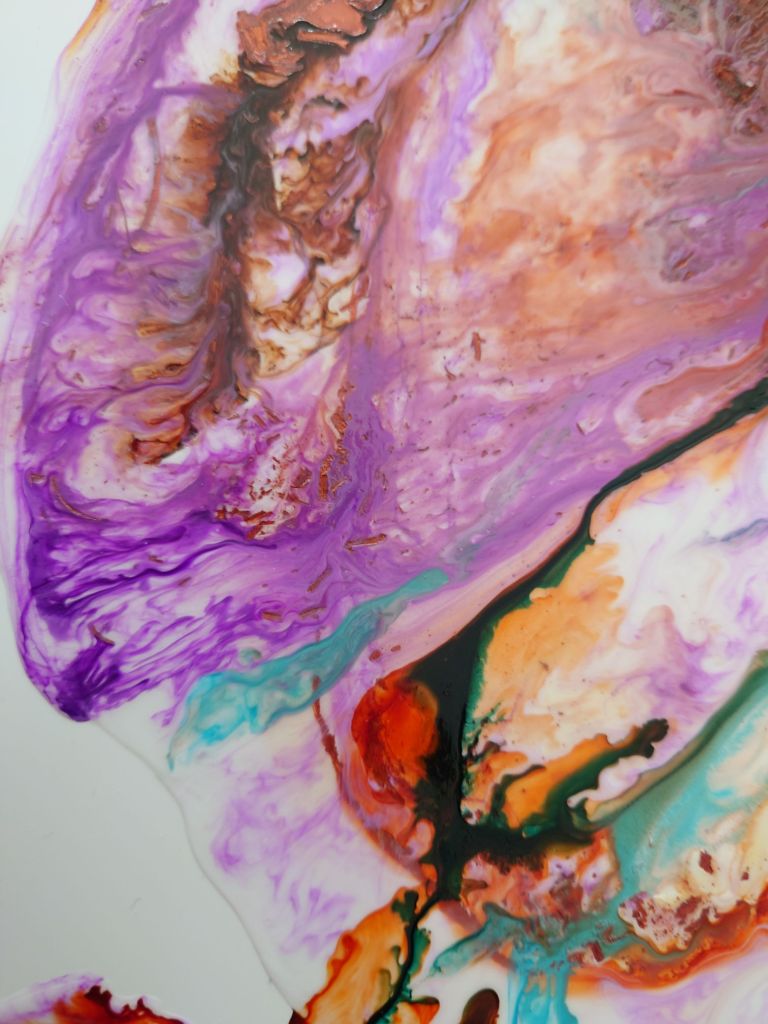
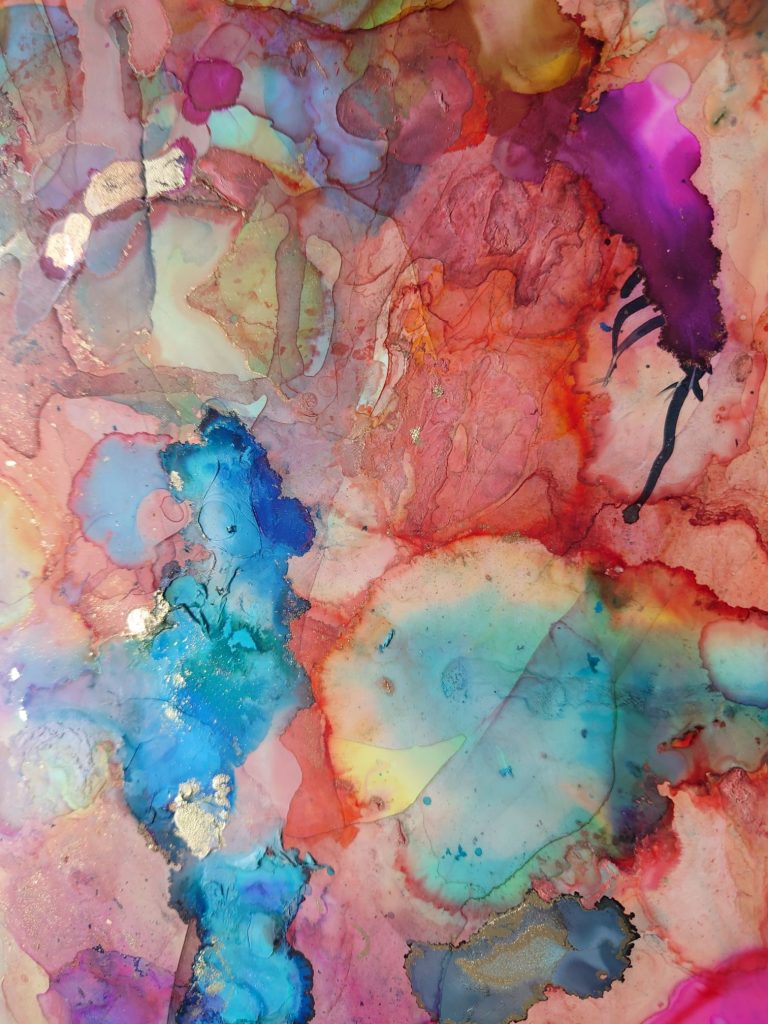
My small series of poured-ink paintings and poured art conveys the complex, messy feelings about belonging. Figuratively, these also show the sickness and tensions felt in navigating relationship conflicts on the journey towards achieving psychological safety.

The above shows two segments from my series of poured paintings using alcohol inks or acrylic inks

I’m planning to create a set of stationery and training/meeting room desk decor from these poured paintings. Follow to learn about when these are released. Thanks for reading thus far.

Have you seen the film yet? What did you think?

Autumn reflections on the summer of Transforming Paint Skins into Unique Jewellery, Alcohol Ink art Experiments and asserting my statement

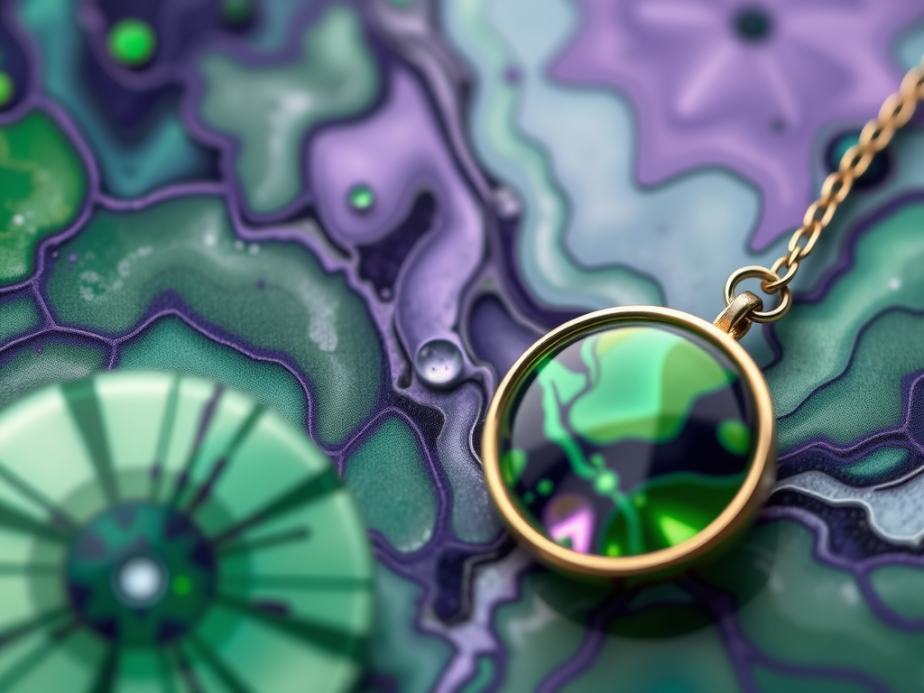
Even with a busy 9-5 schedule, I’ve managed to find some time to experiment. I focus on recovery and taking care of my well-being during downtime. I’ve experimented with creating new items, like transforming my paint skins into brooches, necklace pendants, and cuff links.

I’ve also been painting with alcohol inks and love the wispy ethereal abstract results I get.

I’ve started to understand the ethos of my mark-making. This allows me to start asserting the components of an artist statement for my creations. It’s all about providing an opportunity to focus on the mess.

What do you think about choosing art that portrays the reality of messy situations vs clear, crisp representations of things? It speaks to my critical realism.

My Musings on Making and Colors in Lamp Design: Upcoming Video

My latest video will be released on 10th Feb. It is about how I overcame certain challenges while making my lampshades and table lamps.

The latest explains how I find solutions for the gold paint chipping. It also includes my musings about colours and possible elements.

You see me delight at finished articles while also hearing my disappointment when I don’t like something in particular.

Here is a sneak peek.

Full video scheduled for release 10th Feb at 12 noon

Subscribe to the YouTube video to see more of my videos as they’re released.

Transforming Leadership Through Art: Join My Journey

Welcome to 2025.

I continue logging my now developed practice and process of sharpening my artistic talents. The first half of the year will see less written content from me. Instead I shall be creating more videos and providing links of what I have uploaded from my you tube channel.

I also integrate more of my insights from my executive team coaching course that I did as I found I can use my practice as an artist and maker to help senior executive teams and virtual teams become more effective. Look out for the calls for participants to the inaugural art led executive team coaching programs, that I will personally offer and deliver early to mid 2025.

So for this week, enjoy this video of me taking down my Christmas decorations from my own home office backdrop. It might perhaps be symbolic of marking the end of an era as this year I integrate more of my talents into on sophisticated offering to the world.

Subscribe and ask questions about how I integrate art and playful practices into developing leadership teams.