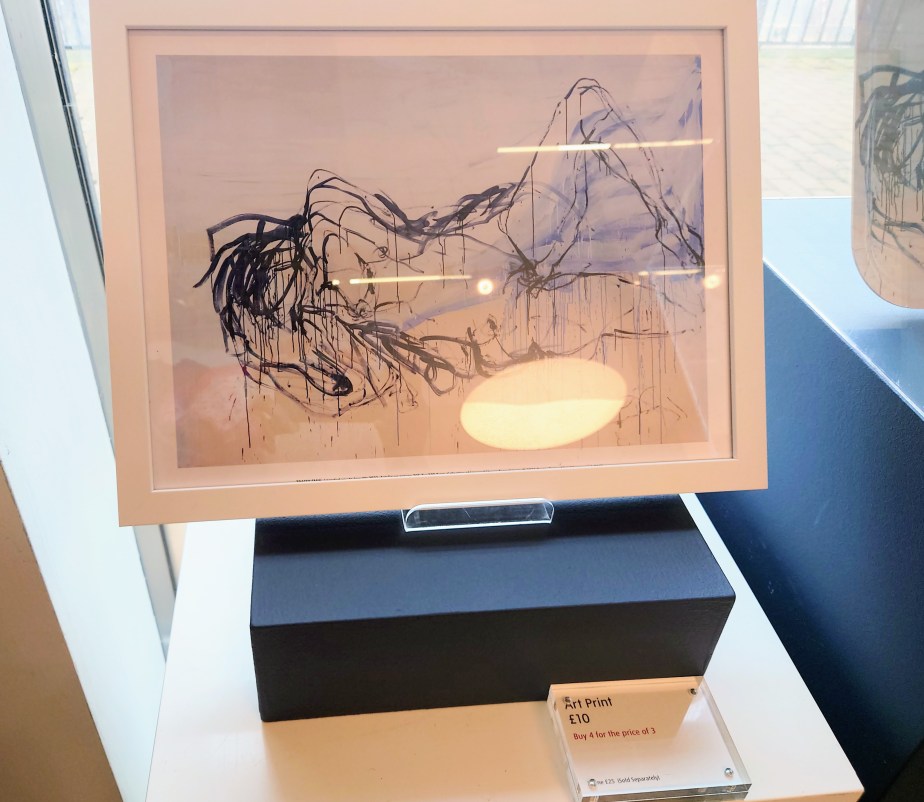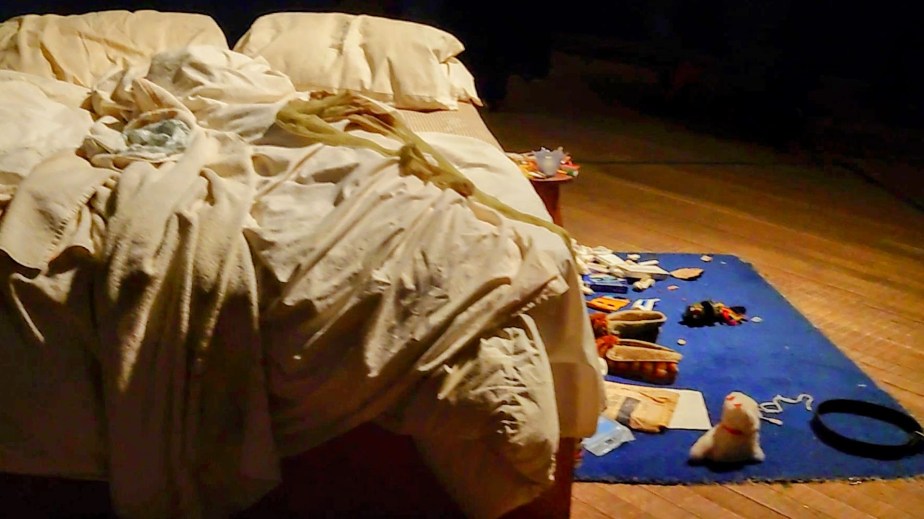
I continue logging my now developed practice and process of sharpening my artistic talents. The first half of the year will see less written content from me. Instead I shall be creating more videos and providing links of what I have uploaded from my you tube channel.
I also integrate more of my insights from my executive team coaching course that I did as I found I can use my practice as an artist and maker to help senior executive teams and virtual teams become more effective. Look out for the calls for participants to the inaugural art led executive team coaching programs, that I will personally offer and deliver early to mid 2025.
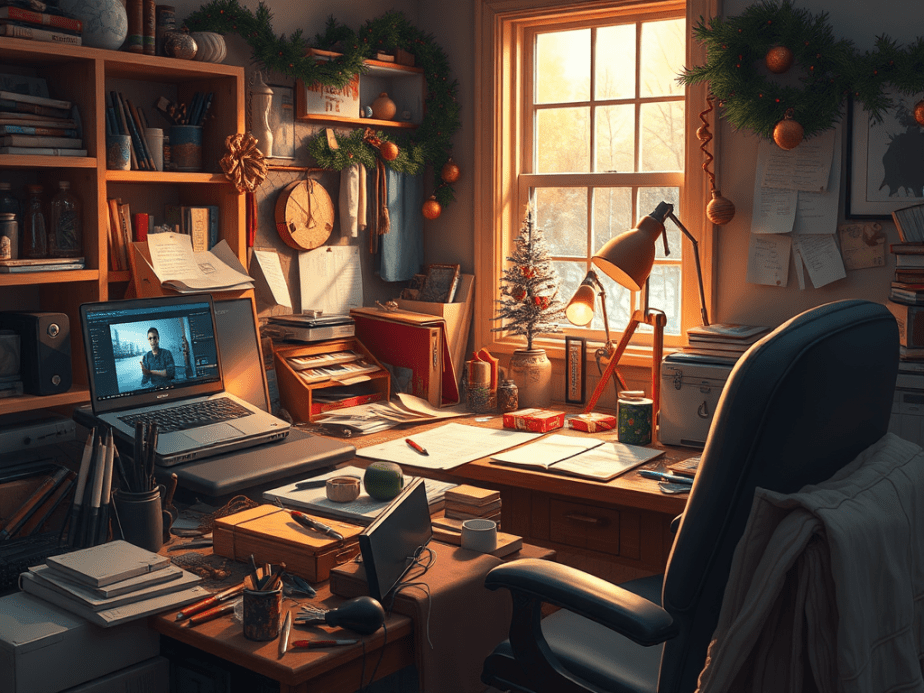
So for this week, enjoy this video of me taking down my Christmas decorations from my own home office backdrop. It might perhaps be symbolic of marking the end of an era as this year I integrate more of my talents into on sophisticated offering to the world.
Subscribe and ask questions about how I integrate art and playful practices into developing leadership teams.
The featured image above was generated by AI after it analysed all the images on this post. Interesting 🧐 not sure I like it this week.
Now that all the lamps have their feet attatched the look is completed. I like that the feet echo the organic black shapes in the poured skin that surflaces the barrel of the lamp.
In creating a series of painted and poured skins and assembling each onto lampshade making backing I first thouhgt I was a bit crazy, but I didnt mind because people had volunteered that they loved what I had created. I later discovered that I am not solitary in making sculpural forms out of paint integrating a clear foundation for a more etherial spirited look. I had learned about sculptural skins before as we were taught that in my mixed media class at Central Saint Martins. But I hadnt come across an artist who had had integrated the clarity of acrylic sheeting in their work.
Poured paint sculpture lamps: The first trio with all their feet fitted, allowing paintings to be formed into semi transparent tablelamps15 cm acrylic abstract poured on PVC formed to tablelamp signed on the back..20cm poured acrylic and ink laminated on PVC framed with black cotton formed to tablelamp
Yet, this week I found new company for this sculpural element of my artwork in the work of Lillian Thomas Burrell. This American artist born in 1927 and five years younger than my mother, wrote a book called From Painting to Painting as Sculpture: The Journey of Lilian Thomas Burwell, by Lilian Thomas Burwell, Hampton University Museum.1997. I have orded a signed copy of it.
I learned about her this week, when Kitty Gurnos-Davis of @artistic.identities posted a reel on IG (16th August 2024) talking about the work of Lilian Thomas Burwell (saying she was ashamed to not yet had discovered her). From watching this reel, I entered into a new world. My internet research took me on a journey. I discovered the images of her sculptures made of painting canvas over a wooden form. There are also images and videos of her use of acrylic sheets with wood in her paintings on canvas.
The Lillian Thomas Burrell exhibition at Berry Cambell Gallery from You Tube
My prior career as a management academic allows me to understand the importance of asserting and connecting with the seminal works in my field. I know that using paint skins is something that is a constant in all my work. Seeing and using paint’s sculptural potential is what only a few artists do. It was encouraging to digitally meet the work of Lilian Thomas Burwell this week. I’ve downloaded the book to discover more about this genre and even asked for a signed copy so I can have it to hand for future reference and inspiration..
I shall be making more of these poured paint sculpure lamps in other colours. Purple and gold was requested on instagram and I might do a deep red and organic green and even a yellow and blue later.
Welcome to this months’s edition of the newsletter. The cultured complexities series is being released and listed on Etsy this week. Artwork is ready to purchase.
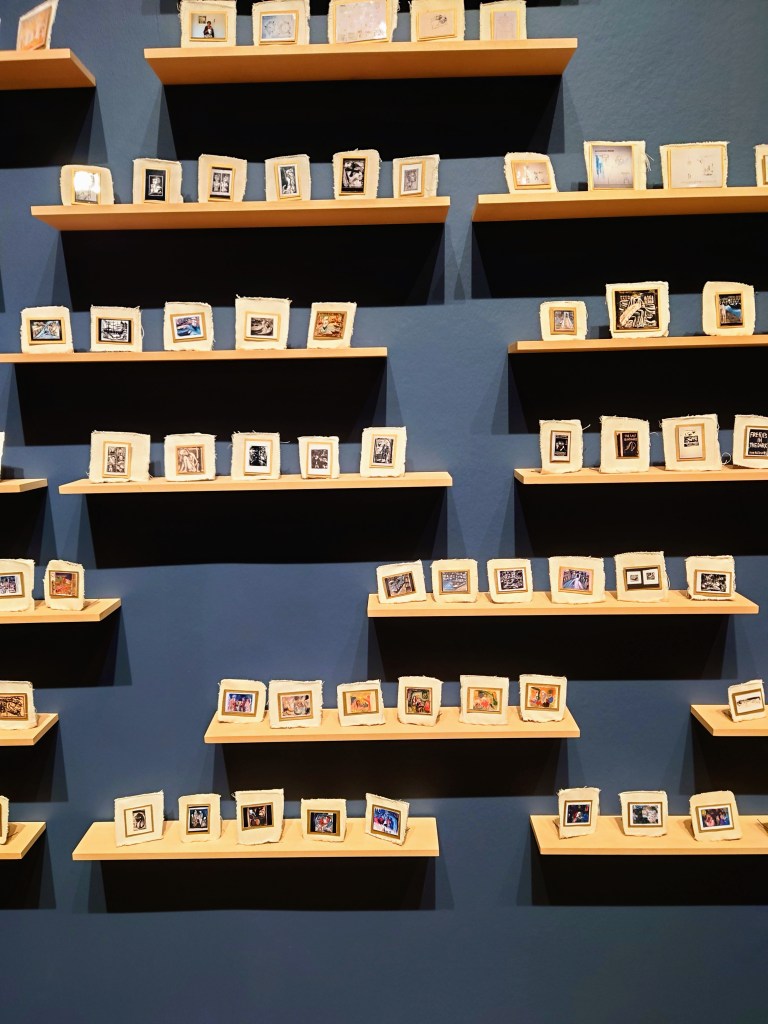
The Cultured Complexities series is of about 30 mixed media painting made small enough for shelf display. It is a series that took me one year to complete as I started April 2023. Below are images that show the processes.
Last week I visited Tennessee USA, to carryout business for my employer. On my rest and travel day I was taken on a tour of Nashville and naturally sought out the art and culture areas. I’m not such a fan of music venues, being from London we get a lot of those around here. Instead I was more intrigued by Belmont and Vanderbilt campus area and the lovely community around there. I went to the Parthenon where they had an artist on show that I have begun to admire because I feel a sense of affinity.
This blog is about six years old. Since 2018 this space has been the anchor to me keeping my artistic practice going as if some form of curious web based accountability buddy that is silently coaching me along.
I was reading what I originally wrote in the About section. It’s what PR folk would say is ‘the origin story’ and how my blog and art practice started with a couple of tubes of WH Smith paint in a used Charlie Bingham box. Looking back at the images I think my practice has grown and developed.
Below are more photos of artefacts portraying the growth in my art practice. You will see how I have graduated from storing things in a used Charlie Bingham tray to now using seven Haeckles Innovation boxes to store my paints and all kinds of other artistic bits and bobs.
Short one this week as blogging from my phone as my laptop died and I cannot decide whether to buy an I pad or laptop.
Meanwhile I’m back in the swing of painting and making as I settle into my new 9 to 5 role. It’s amazing what a rested mind will do for art and creativity.
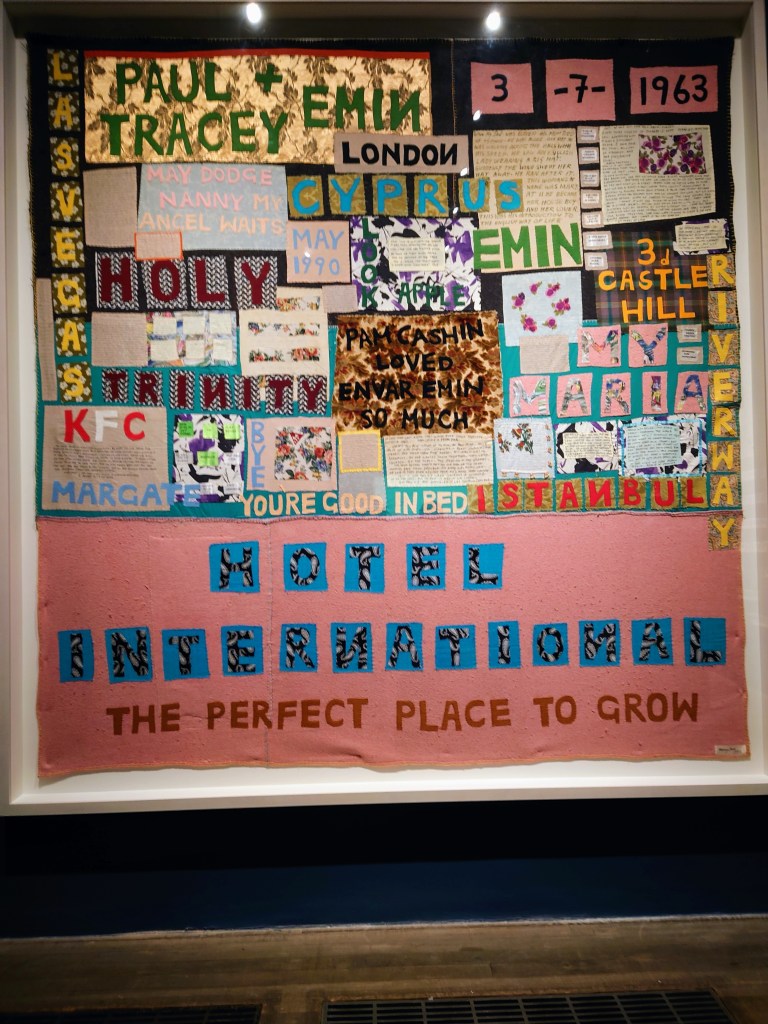
Who would have thought that Margate would be where I would discover a gallery floor full of art about the black lived experience. This blog tells the story of what I discovered and what it meant to my own future art practice, especially when considering how and where I would like my art displayed.
This week I had time off from my 9 to 5 and immersed myself in making while fighting a head cold. But determined to stock up for my Etsy shop and develop the idea of a decor solution for people working from home. Realised that being a lowly crafter, artist and maker has advantages for pushing the art envelope further to improve how businesses work.
I’ve realised that product photography needs a story and an artist. I found that product photography needs to be approached like a painting; there is creativity and artistry to behold. So this week I was making decisions about the story behind my by-products and the kind of story my buyers would like to see.
The story is for the adventurous and about charting new ventures and horizons while keeping a reflective eye on the past.
My buyers are unique individuals; they subscribe to goth, dark academia, light academia, steampunk and heirloom. I also note they are comfortable with maximalism and the odd bit of quirk here and there.
I found it worth exploring new setups with product photography this week. I was also inspired by those food stylists that deconstruct a blueberry pie and trickle crumbles of pastry and jam on the table because they sign up to the messy, over-the neat minimalist vibe.
Below is a sneak peek of behind-the-scenes setups I was playing with. They are not out yet. I’m curious to know what my product photography teacher thinks of them. As I clicked away, I thought, at least he’ll see I’ve been trying. It’ll give him something to discover about me to help him understand what I need to improve. But I’m inspired by seeing the photo like a painted canvas. I can work with that.
A whole load of new shades are being uploaded this weekend. Wait till late on Sunday to look at the shop or even late Wednesday evening.
I’ve started to integrate my two arts. In psychology, that’s a good thing to do to become whole. But I thought about that after and not before I did it.
I have integrated my graffiti art onto my lampshades. They look rather cool. I noticed my curly cursive writing when using paint and how it has a unique style of its own despite my dyspraxia dyslexia which allows the lines and the curves to take on another life of their own.
I was also inspired by a question in our Facebook group for lampshade makers. Someone had asked how to display the lampshades when they go to fairs. This question comes up often. The idea to use mannequins to display the maker’s lampshades came up, and I scoffed at the response, thinking it was that gimmicky, and I couldn’t imagine how that might look. It might look hideous and distract from the shades for the person asking. And I also thought that lagging the mannequins around and putting them together at the fair was difficult.
The person had large shades about 30cm 40 cm wide, and ultimately, the look would have been very Ascot-like, as if the manikins were wearing wide-brimmed hats.
Then I didn’t think about it again until I had to take some images for my 15 cm lampshades for the desks of stylish professionals and their statement yet cosey task lighting. I was searching for inspiration and realised that sitting across from me was a head figure I bought from a trendy interior designer, Abigail Ahern’s shop. I promptly placed one of the lampshades on the statue, which did seem like sacrilege a bit at first.
However, after some thinking about it, I realised how fitting and natural it was., Seeing a statue of a magnificent African woman or woman with African heritage with a tall cylindrical object on the head reminds me of what I saw when I visited Africa. I travelled on a Kenya safari and spent some time in Nigeria for work. Seeing a magnificent woman walking around with a cylindrical bucket containing water, shopping or goods for the markets on their head was normal. But it always pains me that the cylindrical buckets the African women (children too and young men to a lesser extent) normally have on their heads were often some garish yellow or blue plastic unimaginative vessels.
Looking at my graffiti lampshades on the figurine in more depth; I began to take pride in what my eyes were seeing. Noticing how my graffiti artwork on the lampshades then placed on the African woman’s head felt like fantastical art because it depicted a more luxurious scene, albeit slightly surreal.
I imagined myself as an African woman and recalled what I saw in the ritual of attending church and weddings and wearing big wrappers that acted like gigantic fabric expressions of a crown. The look is awesome.
But what if there could be something like my beautiful cylindrical vessels (lampshades) that the African women could continue deftly carrying on their heads as they go about their daily life and l chores?
It dawned on me that perhaps my placing of lampshades with graffiti art on sculpture together is another form of fantastical black art. It is indeed my fantasy that those wonderful ladies I saw in Africa had something more glamorous as a vessel to carry on their heads. I would like them to freely cast away those horrible unimaginative plastic yellow buckets and go for something more considered in its design.
Those women are very entrepreneurial and perhaps like taxi drivers in London; they could get the carrying vessels of their future sponsored by local businesses, and a local creative person might be able to use top calligraphy skills and design competence to embellish their vessels with more beautiful graphics that become useful communication collateral for local businesses. Ultimately their new carrier vessel earns revenue through advertising the local firm.
I’m going to look into it and see how I can help. However, I wouldn’t be surprised if the women have probably already done it because African women are reported to be highly entrepreneurial. But I would like to get an insight into what African friends think of my fantastical black art (graffiti lampshades on African head sculptures) and the extent to which it reflects the 21st-century African and African women’s vessels they carry around on their heads.
Our teacher took us through some portraits this week in my art class. The usual classics were there for us to study composition, tone, paint strokes etc. But I was struck by how much I was drawn into Julian Opie’s work.
I’d never seen his work before, and I noticed how my eyes were pulled into pattern finding.
However, I took on the challenge of seeing what my marks and finish might be like if I painted in the style of Julian Opie. I initially thought it might be easy; perhaps I was being lazy, but when I realised the attention to detail demanded in getting the contrasting tones right. Another hurdle I had to surmount was the light and the dark shapes to make sure those correctly gave the impression of light and shade. I discovered in class that trying to do this using oil colour is another difficulty because Julian Opie probably uses acrylics. But never mind, it’s all practice.
This week I started a landscape. It was based on one of my popular IG posts where we had a spectacular sunrise in London on Monday. From the images below it is clear to see that I am not a photo realist. There is a touch of impressionism, pop art and fantastical influences in my marks. It reminds me of the comical quality of British painter Beryl Cook.
This week I joined my oil painting class. It was interesting to join an art class online. We use Padlet to share our work after taking pictures using our phones. I rather enjoyed experimenting with the different tones of yellow that could be seen and how the shade of the fruit was reflected in some of the shadows, and it was important to convey that in the paintings. What surprised me was how long it took for the oil paint to dry. But I’m learning how oil painters appreciate the wetness so that you can keep returning and doing this magical chemistry work with the paint.
I noticed the magic as I became mesmerised by the texture, getting colours blended to do the highlights. I was chuffed with the teacher’s comment that she noticed a great 3D effect in my work.
I was nursing that awful cough & sore throat that everyone in London has. It meant that I didn’t make anything this week. Instead, all I could do was lift a finger to order the oil colours that my new art teacher suggested the class buy.
Managed to get my order of oil paint medium
I was so sick that I wasn’t in the mood for painting in the class this week, but because it was an online course (oil painting), I could log in and meet my other classmates, see the setup and observe. They seem like a nice bunch from around the world including the USA. I like how the teacher wants us to show our painting on screen so that she gets the effect of looking over our shoulders. I find it fascinating what teachers can do in the online learning space.
Being a mutted observer for my online oil painting lesson.
I was so sick this week I completely forgot about the Friday evening class in abstract painting. However, I am on the mend and feeling less under the weather.
Photo by Louis Hansel on Unsplash
Next week I hope to join my art classes and show you more of what I’m doing.
My art classes for drawing and painting ended last week and inspired a new focus in my portrait paintings.
I noticed the extent to which I’m interested in the deeper anatomical elements of the skin. For instance, I noticed I spent a lot more time than others in the class on the intricate details of features such as thread veins and fine lines.
While mixing the different colour skin tones, I got the idea of potentially using my cosmetic chemistry insights and knowledge to develop a series of figurative paintings in future. I will link back to this post when I have done the paintings influenced by insights I gained this week.
My art class this week got us to practise our portrait painting with a live model. It was the first time I painted a portrait. I had always been nervous about painting humans. I somehow felt incompetent.
But I realised I had been here before when I got into it. Flashback: I trained to become a beauty therapist when I left school. And no, I was not a beauty school dropout. Instead, I did well. But what people don’t know about beauty training is the amount of anatomy and physiology you must learn. I had exams in the skeletal and muscular systems and cross-sections of the skin. When I told the art teacher about this, I found myself recounting the Latin names of the muscles of the face. Surprisingly I even told her about each muscle’s insertions and origins. Didnt realise I still remembered those pesky exam type answers.
Muscles of the faces
First portrait
Drawing using charcoal
Getting the feel of the block
Drawing using charcoal flat
It was illuminating how my prior experience of understanding what is happening behind faces and below the skin surface was really useful for my drawing. I also remembered the story of Leonardo Da Vinci studying anatomy. It seems he used to study cadavers. But my study of faces was not of dead people. They were the heads of 1000 facials I had done in my 20s in salons and spas in London and around the world.
It was nice to get encouragement to continue still-life drawings. I shall.
An unfinished life drawing of a life model in charcoal.
I went back to basics and relearned drawing, and the strategies used to perfect the representation of the figure.
I learned the intricacies of negative space and what it is used for. I also learned the aligning with a kebab stick. And top tip note to self remember to imagine there is a plate of glass in front of you.
I also learned to insert scaffolding in the drawing to ensure you get the proportion right. All the things they didn’t teach me when I worked towards my A’level art all those decades ago. At least I cannot remember them teaching me. Perhaps when I was aged 15,16,17, I wasn’t listening to what I was taught. But the pictures below show.
I am listening now.
I am listening now to instructions about getting the proportions and balance of my lines right.
I had a pile of work to do and spent some time doing the housework, which felt cathartic. But I experienced guilt because I wasn’t doing the additional work I promised I would do to aid my 9 to 5. I looked up and caught a glimpse of a spider web that must have appeared recently. Seeing this gave me a moment to pause. I paused because I was strangely struck by the beauty of the spider web. The more I looked at it, the more I was intrigued by the amount of work that such a tiny creature might have to do to create such intricate patterns through its mastery of weaving.
I appreciated the thought (if spiders think) in designing the breadth and depth then the shape of the web. I also particularly admired how the sunlight captured what must be hundreds of little notes and intersections of the spider’s web, which made them glisten, emitting all the colours of the rainbow.
They looked like nanocrystals and reminded me of my love for the light in the vintage Swarovski crystals I used to use.
It really was a delight to behold. Seeing the spider’s web was a chance to observe natural beauty and the wonders of a world of creativity that does not come from humanity.
I was transfixed for some time. So took some photos of this incredible piece of installation art created by a spider.
Do not ask me what kind of spider it is. I suspect it might be the kind that enjoys the inevitable spider mite flies around my Calathea and Strelizia plants.
Later in the day, my reflections on the spider’s web produced some ideas for a new line of products. I thought of a way of fusing everything I love to do and weaving my artistic talents with my desire to finish working on those lampshades I had shamefully half made over a year ago. I had suffered from makers block and was dragging my feet towards completing them. But I got my maker’s blank unblocked by being mesmerised by the connections made in the spider’s web.
The sketch shows what the spider’s web gazing taught me. It is an outline plan of three types of new surface designs for lampshades painted with masking and dripping so that the original fabric appears as an underpainting. The masking can aid more graphical forms to appear on the upper paint layer to signify monograms, names or shapes.
It was sad that Queen Elizabeth II died on Thursday, last week. I didn’t realise. I was at a work party. Then, on my way home, I saw all the adverts on the bus shelter portray TFL’s tribute/ perhaps public announcement. This is because all digital posters were saying the same thing. They all said Queen Elizabeth II 1926 to 2022 on a grey background. It was not too unlike the image below. That was my first indication that something had changed. I was very surprised.
Today I have been watching her coffin leave Balmoral and travel to Edinburgh. The road from Balmoral to the East is a road I had also travelled when I lived in Aberdeen as an MSc student at the University of Aberdeen. When the BBC TV presenters were calling out the towns like Banchory and Stonehaven as well as Donatoar Castle while the beautiful helicopter camera view of the journey televised its hearse tracking, it brought back my good memories of the Scottish countryside. It also felt quite moving.
Today it felt fitting to create some etchings and quick paint sketchings and draft paintings in royal purple. These are unfinished works. Below are images using purple. I sometimes shy away from purple, but since Queen Elizabeth II’s death, I’ve seen the Empire State Building shine her image amidst purple lights. Purple is currently a big theme.
Queen Elizabeth’s coffin is due to arrive in London via Northolt Airport (not far from where I live). I remember going to Northolt airport 25 years ago to watch Diana’s coffin arrive from Paris, and I (with some friends) watched it travel down the tunnel for the A40. In fact, I’m inclined to go to the A40 on Tuesday to pay my respects to Queen Elizabeth as the hearse makes its way into central London. If I get any pictures, I will post them here. The ritual of watching dignitaries and their coffins travel by road via TV reminds me of when I watched Nelson’s Mandella televised coffin travelling to its burial site in 2013. It is amazing what TV can allow you to do nowadays.
I saw the In the Black Fantastic exhibit at the Haywood Gallery. A big show of artists from the African Diaspora. Including Chriss Ofili, Nick Cave, Hew, Locke and others. Below is the full list of artists at the In the Black Fantastic
Artists at In The Black Fantastic
Wangechi Muto
Lina Iris Viktor
Hew Locke
Nick Cave
Tabita Rezaire
Rashaad Newsome
Ellen Gallagher
Chris Ofili
Cauleen Smith
Kara Walker
I was excited to feel a sense of affinity developing as I saw the work of these artists. That sense of like mind arose because many of these famous artists used gold or gold leaf, some used gems or Swarovski crystals. I saw gemstones sprinkled and how some used raffia trim as fringing on the edge of a painting. Others used fringing within the painting. I loved the idea of fantastical art as it is an escapist emancipatory healing kind of space to work within as an artist.
I get a sense of hope, but it is not blind hope. It is the kind of surreal conceptualisation of the future that recognises the hurt that has gone before in a beautiful way.
Swarovski Crystals are used to let eyes sparkle
Mahogany and crystals used
Interesting texture with gems
Raffia trim on artwork with 24K gold
24 karat gold, string texture
In the Black Fantastic is showing at the Haywood gallery London until 18th September 2022. It is a little awkward to get there. The nearest entrance is on the south side of the Waterloo bridge,
I recently did an intense course at CSM. It was nice to return to UAL, but to be a student this time.
It made a nice change to discard my old identity as of teacher there and allow some time to learn new mixed media techniques and sharpen my painting focus.
The images show the canvases I am working on and the development of ideas.
The work includes photo transfer, collage, dropping, pouring, oils acrylic, resin, quartz, sand and using paint skins. It was good to have an established artist give voice to my ideas and my approach. I feel more confident in labelling and placing the context of my artwork and how it fits into artworks that have gone before.
Three of the four mixed media I created on the course
Mixed media with pouring, skins with resin pools
Mixed media tools
Products for making the board.
I learned and developed my technique so much. It was fascinating to note how the choice of support, whether canvas, board, and the type of gesso, are also part of the media as they impact the overall effect and desired look and feel of the painting.
My work area for 2 weeks at CSMEven the floor is crafted at CSM with small blocks of wood on The Street runwayAfter pouring before the resin
Watch this space (project showcase) for how the course will influence my future paintings. I’ve got so many ideas and cannot wait to share them with you.
On film
The college’s media person captured my making process and came back to ask if I would do an interview that they would film. I declined the interview for a range of personal reasons. But I am happy to say you might catch sight of my hands painting in the future ads and social media content for Central St Martins when they promote their courses.
I recently saw the David Remfrey exhibition at the Royal Watercolour Society. I was invited to the exhibition by my old friend Rick who knows the artist. Rick was pleased to see his likeness in a couple of David’s paintings.
The images below show my friend Rick pointing and repeating the pose in the painting “What the Night Tells Me,” which is normally in someone’s private collection.
We also met another watercolour artist at the exhibition (viewing David’s work, I think he was from New York). We had wonderful conversations about the different characters found in David Remfrey’s work. My friend was very proud to see his portrait in the painting, and the back story was wonderful to hear. I had heard the story before but seeing the painting in real life while he explained how he knew David and his partner made the tale more significant and profound.
Left: The Dancers is my favourite painting by David Remfey. Right his 2022 book
Visiting the exhibition was a real treat for me as a dance and art enthusiast. I was delighted to be given a signed copy of David Remfrey’s book there (it was my birthday). Book title is David Remfrey Watercolour by Royal Academy of Arts and Royal watercolour Society 2022.
I loved how exquisite the paintings were. The impromptu gathering of people was magical. It set off an intriguing, informative and interesting conversation about watercolour art. As someone that uses acrylics mostly, the visit inspired me to try out doing a watercolour series of paintings/ creations at a later point.
I might link back to this post when I post the pictures of watercolour items I create at that later point.
I took a short break to St Ives in Cornwall last week. The journey was full of adventures for many reasons. It was my first big trip after two years of lockdown. I had to practice being less anxious about social spaces.
My longest train journey yet: It takes 5 hours to travel from London to St Ives
Purpose
It was meant to be a creative pilgrimage as I was visiting Tate St Ives and Barbara Hepworth museum
Colourful seats for visitors at Tate St Ives. When I left it was full of school children and beach walkers sheltering from the rain.Babara Helpworh Sculpture with her signature string/ wiresThe chest of drawers that this sculpture sits is in the picturesI took this image then realised I’ve seen it several times before. Plenty of Barbara Hepworth Musium shots of her garden sculptures.The SOL LEWITT is in gallery 9 or 10. I was able to gaze at it and find new patterns to add to it. Wall Drawing #1136
Finding affinity
I was surprised to feel less alone with my design style because the hotel room decor was expressive of the cosey smart effect you get when combining pinstripe fabric with nailhead trim as I do in my lampshade collections.
Finding Inspiration
A picture of Barbara Hepworth in her studio. The museum is her studio, interestingly. I was impressed that she might have had lots of parties there. Downstairs is the kitchen and upstairs is the workroom. Similar to my set-up. I felt encouraged.
A chance to practice
The whole experience was affirming for me. I feel that I might be on the right track, after all.
Ist sketch of the holiday. Trying to capture the detail of the shutters but the stylish radiator is imposing a presence My sketches of view from the window.
I did this painting and realised how much it resembles a pineapple skin. Then when inserting some digital art I decided it has to be the world of pineapples too!
An abstract study of pineapple skin by Earthshinearts.com. Com
For some reason my sister really loved this painting.
I didn’t like it because it felt a bit muddy in places and mentally I probably wasn’t in a positive head space when creating it.
At the time of painting this I was feeling confused by the water misting method of mark making but intrigued by the new lighter textures and marks forming at the same time.
So when I went to digitally enhance this painting with my phone while on the 49 bus from King’s Road to White City, I noticed upon inserting the kiwi fruit and the couple on the palm tree I immediately felt uplifted. As a result that helped me to feel more cheery about the painting. The woman sitting next to me was obviously wondering what I was doing and I felt a twinge of nervousness about that.
I need not have felt embarrassed as I ultimately felt encouraged when I saw how so many people loved and liked this digitally enhanced version on Instagram and Facebook.
It’s funny how digitally enhancing an image that you’ve painted can end up boosting your own mood more positively.
I created a scene that I wish to be a part of. Enjoying the lush steamy environment of the Land of Giant Kiwi.
Note to self is that I shall look further into the benefits of digitally enhancing items I paint in future.
I didn’t mean to. It just happened that way that I created an image with poppies that look like they are Dazed and Confused .
I created this image using my usual atmospheric landscape mindset and experimented with red because I don’t really use red. Red is one of those colours that I hate immensely, so I have always avoided using red in paintings.
But I’m finding I quite like this image. I’m surprised at how beautiful it looks and almost traditional it feels in its floral nature. When I took up the activity of painting, in my mind’s eye, I couldn’t imagine myself being a life painter and that’s why I decided to go down the abstract painting route.
However looking at this rather appealing image of shall we say, spun out poppies, I think it is possible for me to pursue being a painter of floral patterns.
So I experimented last night I’ve been watching all these videos about acrylic pouring . I do like to see the finished results as these amazing sparkly Goldie blingy shiny paintings .
Doing an acrylic pour is one of the items on my activity wish list so I had a go and in this next series of five are the end results.
It’s not strictly an acrylic pour it’s a made up version. Normally a pour needs things like silicon and all kinds of bits added to make the the paint separate so that you get what they call cells.
So for the first one you can see in the next post that I added Environ face mask to it and I added a serum gel something I thought would be making the acrylic separation. But that didn’t work in the same way I would hope.
Instead what I do love is the smooth texture the my upcycled make up brushes make to the painting. Here I used the contour brush. I’m sure I would not be getting such a smoothly sumptuously painted surface if I used ordinary artists paint brushes.
You must be logged in to post a comment.